- calendar_today August 28, 2025
The Film That Made the World Fall in Love with K-Pop All Over Again
KPop Demon Hunters has topped Netflix global rankings since its June release. At the time of writing, the Korean animation comedy with a fantasy action twist has been streamed over 33 million times in 93 countries and ranked number two worldwide. Fans have started making fan art, and a sequel has become the number one request in online spaces.
The film’s success, however, is not only on the digital platform. Two fictional bands, Huntr/x and Saja Boys, that lead the film’s show-stopping musical battle have also won the battle of the real-world charts. In only one week since the film’s 20 June premiere, the seven soundtrack songs outperformed both BTS and Blackpink to reach the Billboard Hot 100. Seven of their songs made it to the top 10 of Spotify’s US real-time charts and dominated both the first and second spots. This is one of the very few times a fictional band has done so.
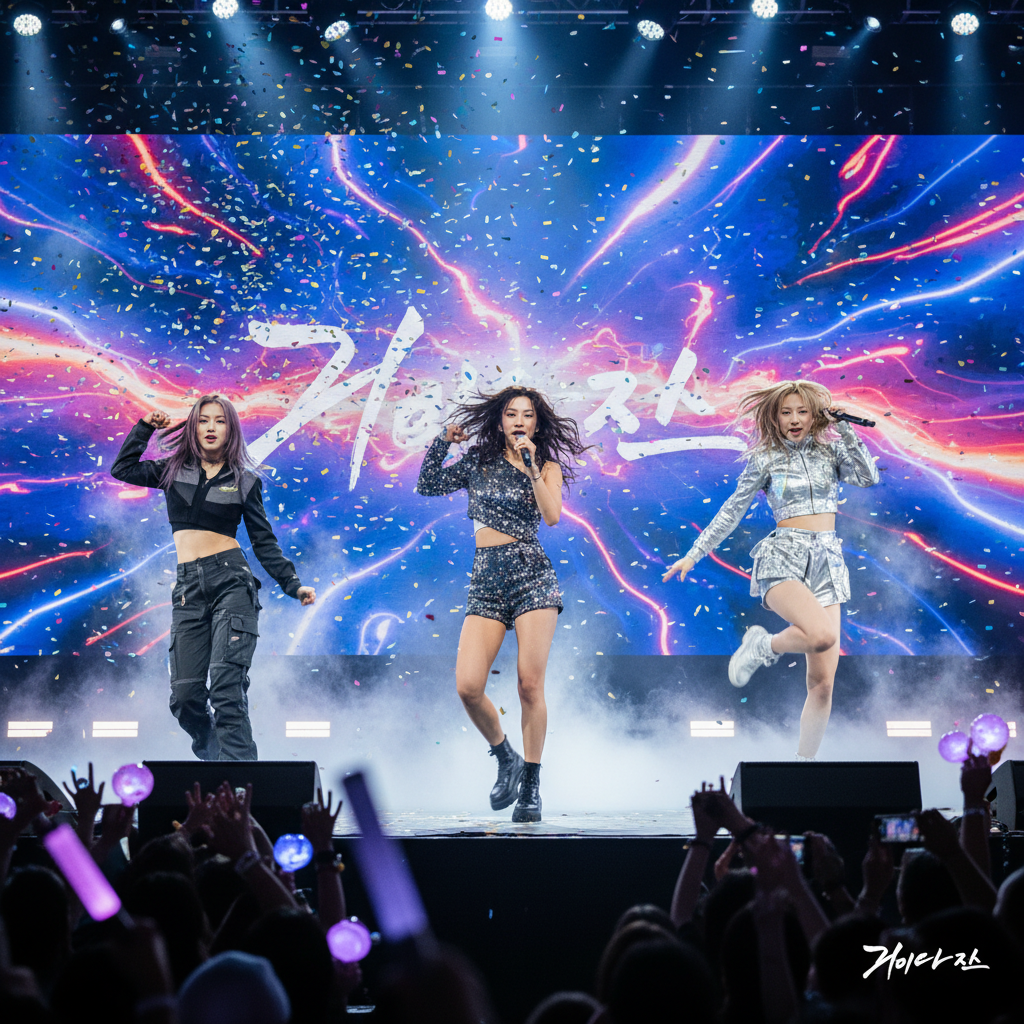
The music and animated battle scenes aside, the KPop Demon Hunters animation is a live-action K-pop film about three girls in an all-girl K-pop band, Huntr/x. Rumi, Mira, and Zoey are a trio who, apart from being famous all over the world and in the middle of their world tour, also have to fight to keep the world safe from an unknown demon force. The girls and the all-boys gang they find themselves up against, Saja Boys, clash on stage and battle in action sequences while exploring themes of friendship, trust, and authenticity.
The mixture of humour, wit, touching and relatable parts, plus the spectacle of K-pop fantasy, is what has made the film a success among viewers of all ages. Netflix’s KPop Demon Hunters is streaming in selected countries and is available with English subtitles for the rest of the world. As the chart-topping actor points out, the music and animation have helped the film reach a “universal level.”
KPop Demon Hunters’ music has become a viral hit. The Korean-Canadian co-director, Maggie Kang, was inspired by K-pop idols from her childhood and youth to develop a style that makes the songs an integral part of the story. Music is not just a song but a fight against evil in the film. In addition, although K-pop idols are part of the world of millions of young viewers, they are only fiction. The music in the movie had to be natural. Not to interrupt the flow of the film, but rather to support the plot.
“Incorporating Korean culture throughout in authentic ways [is] what gives it a surprise level of maturity.” So says Lashai Ben Salmi, community leader in Korean culture in Europe, known for bridging communities and producing music events.
The Korean-Canadian film director collaborated with American co-director Chris Appelhans and a Korean label with the support of many famous musicians to achieve this natural and high-quality musical result. Teddy Park, known for his successful work in music for Blackpink, and Grammy award winner Lindgren, producer for BTS and TWICE, among others, have created original songs that can be in real K-pop charts, too.
Amanda Golka, a Los Angeles content creator who is not in the K-pop music trend, fell under its spell. “I have been blasting the soundtrack from Spotify every time I’m in the car,” she says, “and I have been teaching my friends the choreo for ‘Bounce To Bounce.’ It’s fascinating how music can be such a universal language.”
Culture, Entertainment, Fashion — Tradition Follows the Trend
The scene details have been another of the critical factors in the film’s success. K-pop music, as well as K-dramas and Korean cinema in general, has been very mainstream in the US and other Western countries. KPop Demon Hunters, however, has set a much higher bar for representing Korean entertainment. In addition to K-pop, the film shows the typical Korean traditions of eating together, using chopsticks, Korean cuisine, and street food.
The film captures well-known Seoul buildings, from ancient city walls to old-fashioned Hanuiwon healing clinics, traditional bathhouses, and Namsan Tower. These kinds of scenes are not just a cliché in the movie; it’s where Korean viewers feel an intimate connection to the fictional film. The typical food and architecture, as well as the everyday life details, which Hollywood films have presented as the Kimchi Dragon so far, are authentic.
Attention to detail, study, and fact-checking have continued in the production process. The team went to South Korea to make all the details correct. They visited Korean folk villages, explored areas such as Myeongdong (shopping), and researched traditional clothing. Some Korean dialogue can be heard in the scenes, and some Korean words and lyrics in the songs. The lip movements of the characters when they sing are also in Korean rather than English. As Golka says, “The characters are bubbly and expressive, and their reactions are Korean at heart.”
The film also shows several aspects of K-pop fans and fan culture, from fan signing events, light stick colours, glows, Kalgunmu (perfect synchronised choreography), Korean signs, to the Saja Boys’ unique, negative way of interacting with their fans.