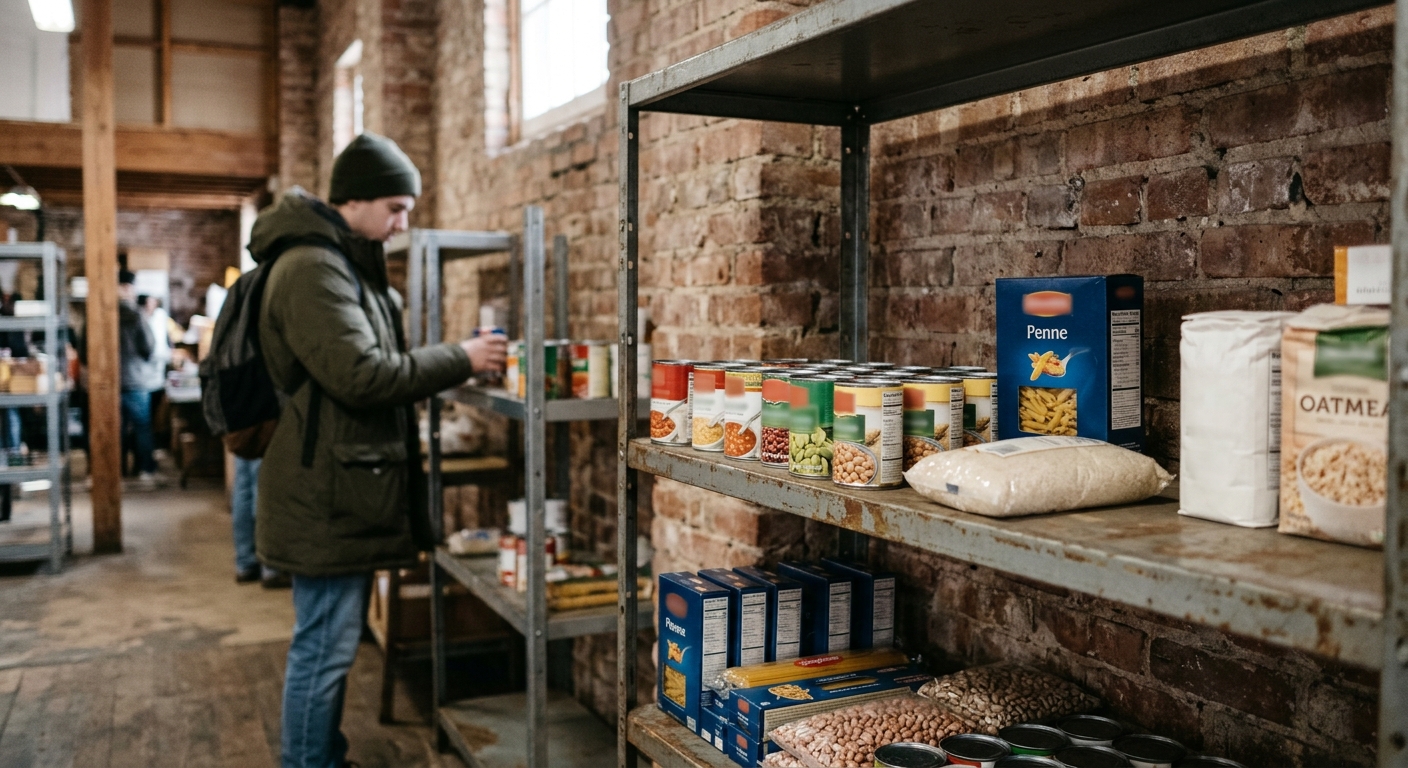
AI-generated illustration; not a photograph of the reported event.
- calendar_today November 3, 2026
National Survey Reveals Escalating Food Insecurity in Canada
A recent national survey highlights growing food insecurity among Canadians, revealing that more adults are skipping meals or reducing meal sizes due to grocery affordability challenges. The 2026 Salvation Army Poverty and Socioeconomic Analysis, conducted by Edelman Data and Intelligence, surveyed over 1,500 Canadians this September. The results underscore the deepening impact of economic strain, particularly heightened by U.S. tariffs affecting the Canadian economy.
Meal Skipping and Food Bank Use on the Rise
The survey found that 31 per cent of respondents reported skipping meals or cutting back on their portions because they could not afford groceries, up from 27 per cent last year. The use of community supports such as food banks also climbed, with 15 per cent of Canadians turning to these services compared to 11 per cent in the previous year. These figures signal a marked increase in reliance on food-related aid among the population.
Young Adults Disproportionately Affected
The data points to an even bleaker outlook for young Canadians. Among respondents aged 18 to 34, 41 per cent admitted to skipping meals — a rate 10 percentage points above the national average. Additionally, 23 per cent of young adults said they had accessed food support services. These statistics indicate significant challenges facing younger Canadians in maintaining food security.
Economic Factors and U.S. Tariffs Fuel Concerns
The survey also highlights the perceived economic impact of U.S. tariffs on Canadian households. Nearly nine in 10 Canadians expressed concerns that the U.S.-Canada trade conflict would drive up prices for everyday goods. Moreover, 60 per cent (three in five) reported that their households were already feeling the financial strain caused by these tariffs.
Financial Hardship Extends Beyond Food
Financial challenges are prompting many Canadians to make tough financial decisions. According to the survey, half of respondents reported dipping into their savings to cover basic needs, while 40 per cent said they were turning to debt or credit to get by. Regarding housing, 24 per cent indicated they spend at least half of their after-tax income on housing costs, and half were not confident they could secure another affordable home that met their needs in their area.
Salvation Army Responds to Survey Findings
The Salvation Army expressed deep concern over the survey’s findings. Glenn van Gulik, the organization's strategic engagement director, stated that "making ends meet is no longer about cutting back on extras. It’s about making difficult choices between food, housing and other basic necessities." The report underscores the complex decisions families face amid ongoing economic pressures and increasing food insecurity in Canada.
About the Survey
The 2026 Salvation Army Poverty and Socioeconomic Analysis polled a nationally representative sample of Canadians using the online Angus Reid Forum. The sample included current and past users of Salvation Army services, but excluded residents of Canada’s territories. As a non-probability sample, the report notes that a margin of error cannot be calculated.
Source: toronto.citynews.ca.