- calendar_today August 21, 2025
.
In an abrupt reversal on Monday, former President Donald Trump said the United States would open its doors to 600,000 Chinese students despite months of saber-rattling against Beijing over tariffs and the flow of Chinese nationals into the U.S.
“Here’s what I can tell you: I hear so many stories that we’re not going to allow their students,” Trump told reporters from the White House. “We’re going to allow their students to come in. It’s very important, 600,000 students. It’s very important. But we’re going to get along with China.”
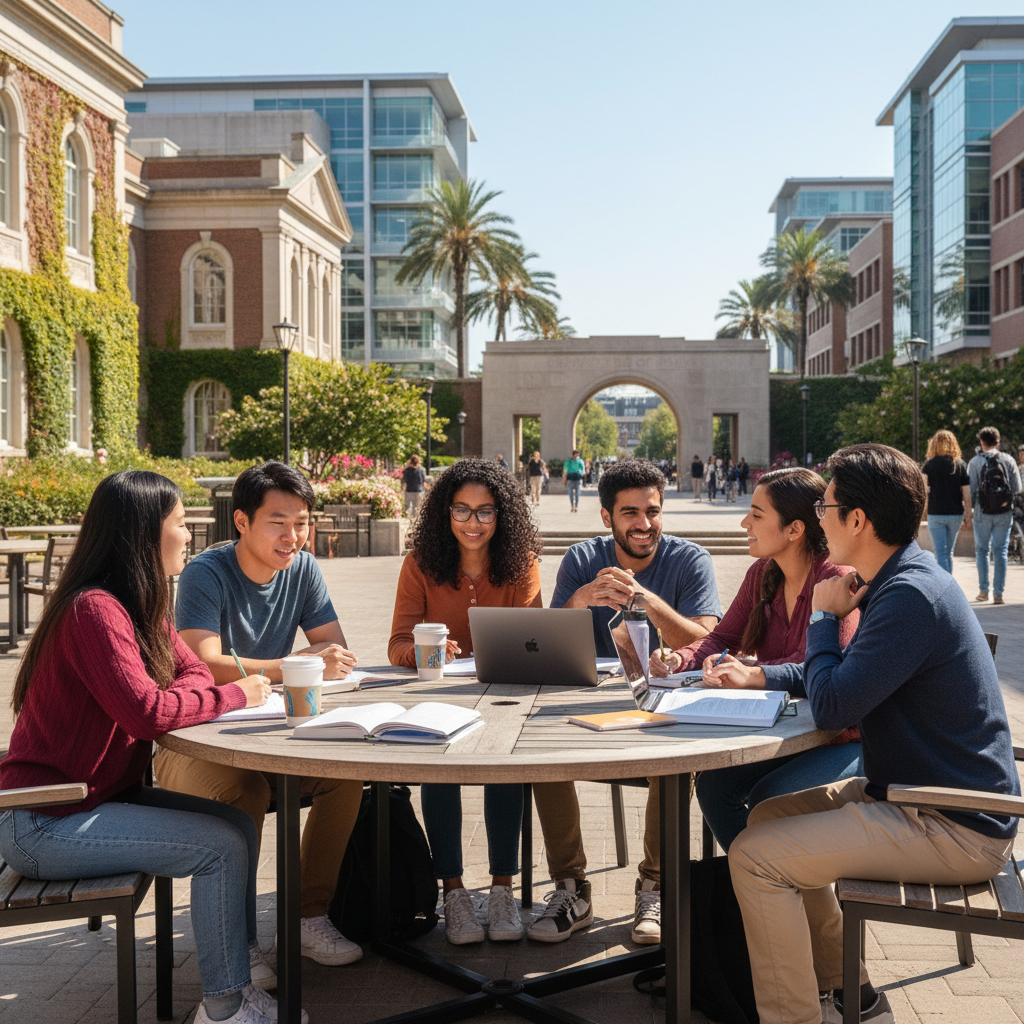
At present, around 270,000 Chinese nationals are studying at American universities, and Trump’s new target of 600,000 would more than double that figure. Chinese students, long the largest cohort of international students in the U.S., are a key source of tuition dollars for American schools.
Trump has long staked out a more aggressive line against China on student visas than his own administration, sometimes contradicting the State Department and intelligence agencies.
In May, Secretary of State Marco Rubio said the administration would “aggressively revoke” visas for Chinese students if they are members of the Chinese Communist Party or work in areas deemed sensitive, such as artificial intelligence or genetic research.
The plan was panned by higher education groups, and Trump himself seemed to backtrack on the restrictions in June, telling reporters that he had “always been in favor” of Chinese students coming to the United States.
Monday’s comment seemed to ratify that softening. Trump made the remarks just ahead of a planned meeting with South Korean President Lee Jae Myung, and said he would like to hold a summit of his own with Chinese President Xi Jinping before the end of the year.
“Let’s see. I would like to meet him this year,” Trump said. “We have a very good relationship with China in terms of a possible meeting. I would like to do it. I think it’s a very important thing to do.”
Trump has long been more hawkish on China and visa policy than other members of his administration. In May, Trump ordered the expulsion of 10 Chinese graduate students and researchers accused of withholding their ties to the Chinese government.
His decision to allow in new students and maintain links with China in spite of those scandals and the recent tariff escalation signals a desire to keep academic exchange as an option even as his administration’s trade and diplomatic relationships with Beijing sour.
As part of an aggressive tariff campaign against China, Washington earlier this year imposed a 145 percent levy on all Chinese goods coming into the U.S., with Beijing retaliating at 125 percent on American exports. Trump had at one point pledged a 100 percent levy on Chinese magnets alone, a mark he threatened to double last week.
“We’re talking about, very substantially — we’re at 145 percent, we can go to 200 percent,” Trump said at a rally. “China, intelligently, went and they sort of took a monopoly on the world’s magnets. It’ll probably take us a year to have them.”
In addition to academic visas, Trump also reiterated his threats to raise tariffs on Chinese goods by as much as 100 percent. “It’s possible that I would go 200, or I would go back to 145,” he said. “But we have a very good chance of doing that. They have to play fair.”