
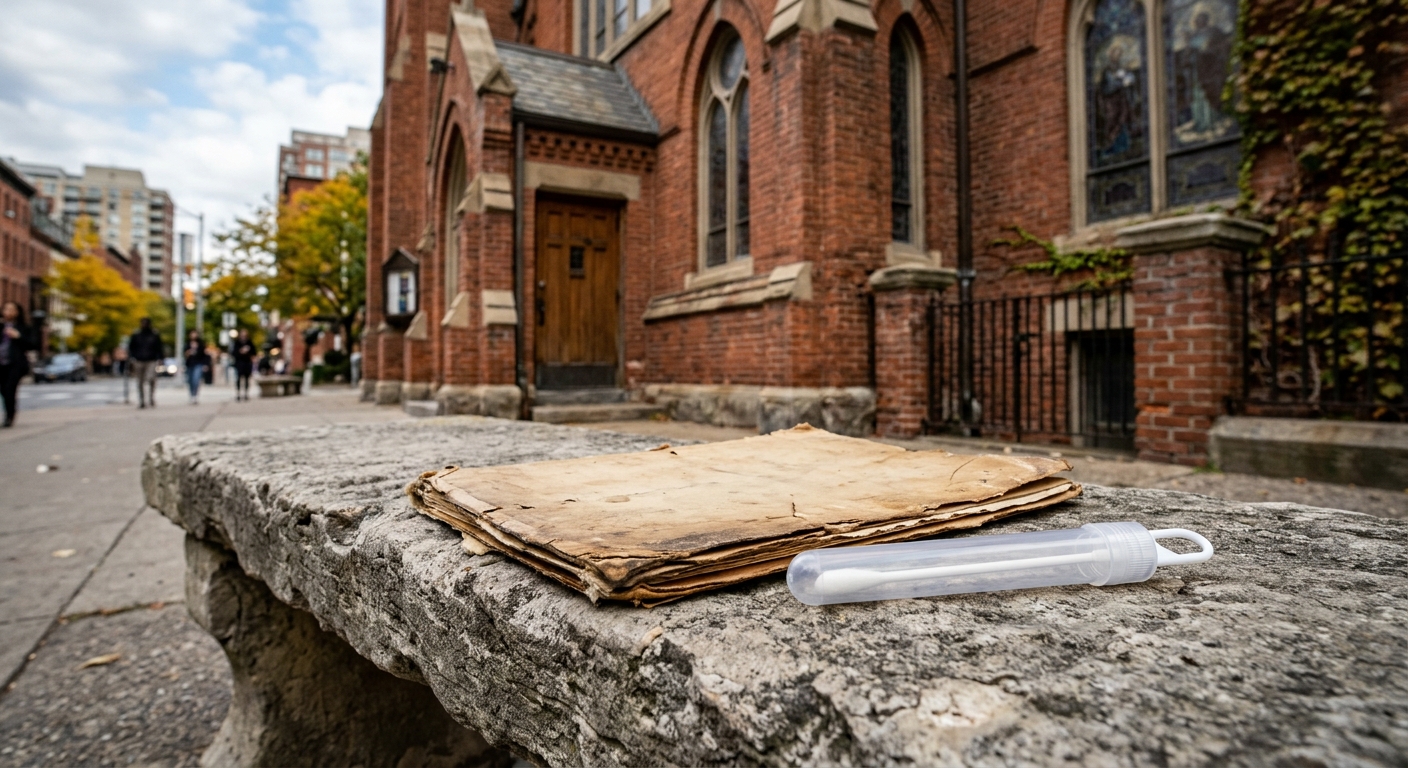
AI-generated illustration; not a photograph of the reported event.
- calendar_today November 11, 2026
Breakthrough Identification in Decades-Old Case
More than thirty years after an unidentified man was found dead on the lawn of a downtown Toronto church, police have confirmed his identity using investigative genetic genealogy. This significant development concludes a long-standing cold case that began on September 15, 1992, when the man was discovered unresponsive near Queen Street East and Church Street.
Discovery and Initial Investigation
On the day of the incident, police, firefighters, and paramedics responded quickly to the scene. Despite their life-saving attempts, the man was pronounced dead at the location. At the time, investigators determined there were no suspicious circumstances surrounding his death. However, the absence of identification documents and the limits of traditional investigative methods made it impossible to establish who he was. The case subsequently remained unsolved for over three decades.
Application of DNA Technology and Genetic Genealogy
Toronto Police Service revisited this long-term unsolved case in 2025 as part of Project 31, a humanitarian initiative targeting the identification of unidentified deceased individuals through advanced DNA technology. Investigators developed a DNA profile from the unidentified man and submitted it to public genealogy databases in January 2026 as part of their forensic testing process. Though the closest genetic matches were distant relatives, analysis indicated that the man’s family roots were in the United Kingdom. Police genealogists and investigators dedicated months to tracing these connections, ultimately suggesting that the individual was a man named Derek, a British-born person who had moved to Toronto during the 1970s.
A Complex Missing Person Case
Further investigation revealed an unusual sequence of events in the missing person report. Toronto police state that Derek was not reported missing until December 1993—approximately fifteen months after his body was discovered. The missing person report was submitted by Derek's lawyer, but authorities did not connect this case with the unidentified man found in 1992. The missing person file was closed years later when police were mistakenly informed that Derek had died on a specific date. In reality, Derek had simply been declared legally dead after years of no contact, with no confirmed record of his death’s time or location.
Confirmation Through Fingerprint Identification
The final breakthrough in the case came after investigators located Derek’s fingerprints in another country. By comparing these prints to those collected from the unidentified man in Toronto in 1992, they confirmed that both sets belonged to the same person. Following this confirmation, Toronto police notified Derek’s family in the United Kingdom about the identification.
Project 31’s Ongoing Humanitarian Effort
Derek’s case marks the fourteenth successful identification achieved through the Toronto Police Service’s Project 31 initiative. Launched in 2022, Project 31 targets 31 open cold cases involving unidentified deceased individuals with available DNA for advanced forensic testing. This continuing humanitarian initiative combines modern DNA technology, genetic genealogy, and fingerprint identification to resolve cases long considered unsolvable.
Related coverage
Source: toronto.citynews.ca.


