- calendar_today August 14, 2025
The Greater Toronto Area (GTA) remains one of the most closely watched real estate markets in North America. In 2025, its investment landscape is being shaped by persistent affordability challenges, steady immigration-driven demand, and evolving work-life preferences. While interest rates remain elevated compared to pre-2020 levels, stabilized inflation and labor market strength are keeping investors engaged across multiple property sectors.
Toronto’s market continues to diversify beyond traditional downtown condos. Investors are now prioritizing long-term income potential, adaptability to changing demographics, and transit-aligned development. From intensifying urban nodes to expanding suburban communities, seven real estate categories are standing out in the GTA for their resilience, demand fundamentals, and future potential.
Multifamily Housing: Demand Outpaces Supply
In a city where homeownership is increasingly out of reach for many, purpose-built rental properties are playing a larger role than ever. Multifamily housing is thriving across both established and emerging markets in the GTA. Urban neighbourhoods like Midtown Toronto, Parkdale, and East York are seeing growing interest in professionally managed rental buildings, particularly those within walking distance of transit.
In the outer regions—Mississauga, Vaughan, and Markham—developers are ramping up mid-rise rental projects to meet demand from both new immigrants and priced-out buyers. According to Urbanation, average rent growth across the GTA in 2025 is holding at around 3.5%, with vacancy rates under 2% in most neighborhoods. Investors favor these properties for their consistent occupancy, low turnover, and potential for moderate yet reliable rental income growth over time.
Industrial Real Estate: GTA’s Quiet Performer
Industrial real estate has quietly become one of the best-performing asset classes in the GTA. Fueled by the rise of e-commerce, logistics, cold chain demand, and reshoring of supply chains, warehouse and distribution facilities remain in short supply. Areas like Brampton, Caledon, Halton Hills, and even as far east as Clarington are seeing a surge in leasing activity and new builds.
Colliers’ latest 2025 report notes that industrial rents across the GTA are up more than 7% year-over-year, with vacancy levels below 3%. The growth of AI-driven fulfillment centers and automation in logistics is also attracting REITs and pension funds. For investors looking for predictable, long-term cash flow with limited tenant turnover, industrial assets are becoming increasingly appealing in the Toronto region.
Single-Family Rentals: Outer Suburb Goldmine
As families seek more space and stability, single-family rentals (SFRs) are gaining traction in GTA suburbs. Places like Oshawa, Milton, Georgetown, and Aurora are witnessing growing demand for detached and semi-detached rental homes. These areas offer good schools, access to nature, and manageable commutes—factors high on the priority list for young families.
In 2025, tight inventory and unaffordable purchase prices are driving more households to rent for longer. Investors targeting SFRs benefit from longer average tenancies, lower per-unit maintenance costs compared to multifamily buildings, and steady cash flow. New tools and platforms are also making it easier to manage scattered rental homes across multiple municipalities.
Shifting Demand from Core to Periphery
Unlike some U.S. markets seeing inter-state migration, Toronto’s shift is more localized. The affordability gap between the city core and outer suburbs continues to grow, causing population redistribution across the 905 and 705 areas. Cities such as Hamilton, Barrie, and Kitchener-Waterloo are experiencing an influx of former Toronto residents, particularly younger professionals and immigrants looking for better value and growing employment hubs.
That said, downtown Toronto is regaining some momentum. The return of students, office workers on hybrid schedules, and tourism is breathing life back into condo-heavy districts like the Entertainment District and St. Lawrence Market. Developers are now focused on blending mid-density housing with retail and coworking, particularly in areas supported by new transit developments like the Ontario Line and the Eglinton Crosstown.
Mixed-Use Projects: Suburban Urbanization
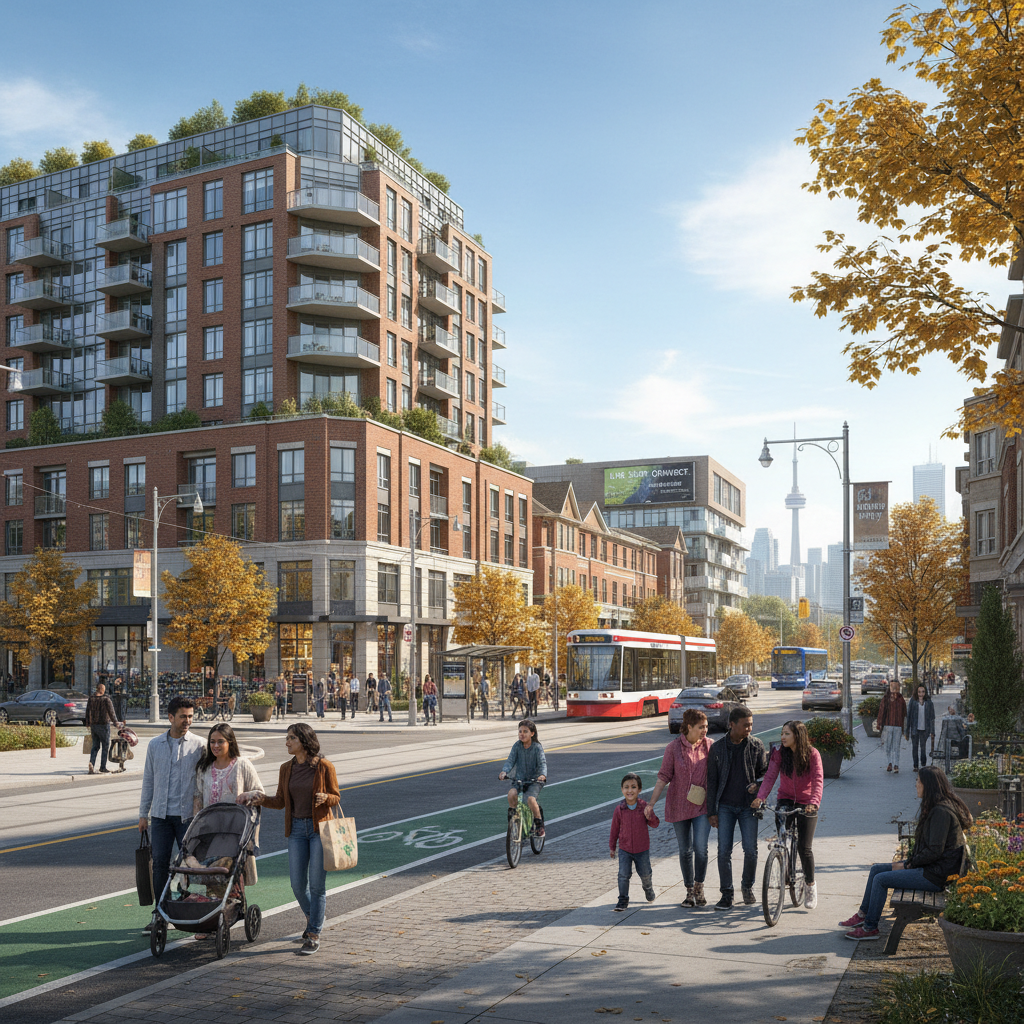
One of the most notable trends across the GTA in 2025 is the rise of mixed-use development beyond downtown. Suburban municipalities—like Milton, Pickering, Richmond Hill, and Newmarket—are embracing projects that combine residential, retail, health services, and coworking spaces in one walkable community.
Mixed-use hubs in Mississauga’s City Centre and Markham Centre are thriving, with strong pre-leasing rates and growing investor interest. These developments appeal to both downsizing boomers and younger renters who value proximity to services, green space, and efficient transit. Although delays in approvals and rising construction costs pose hurdles, the long-term vision of live-work-play neighborhoods continues to drive strategic investment.
Niche Growth: Student & Senior Housing
Toronto’s universities—University of Toronto, TMU (formerly Ryerson), and York University—are generating significant demand for modern student housing. Purpose-built student accommodations (PBSA) are outperforming older housing stock, offering fast leasing, high occupancy, and predictable turnover cycles. Units with furnished layouts, group study areas, and high-speed internet are in high demand.
Meanwhile, senior housing in the GTA is evolving to meet the needs of a rapidly aging population. Aging baby boomers in suburbs such as Burlington, Vaughan, and Whitby are seeking senior living communities that offer flexible care models, on-site wellness services, and social amenities. Assisted living and independent senior housing are seeing rising occupancy and investor interest as demand outpaces supply.
Risks in the Toronto Landscape
While the GTA offers strong fundamentals, investors must be aware of regional risks. Toronto remains one of the most expensive markets to build in, with development charges, land costs, and approval times stretching out project timelines and cutting into margins.
Environmental factors, such as rising insurance premiums for properties near Lake Ontario or flood-prone areas like the Don Valley, are also impacting investment decisions. Rent control policies, which limit rent increases in certain units, and zoning restrictions in stable neighborhoods may affect cash flow expectations and property repositioning plans.
Analyst Takeaways
“Toronto’s market rewards local knowledge and long-term thinking,” says Emil Patel, head of urban markets at Urban Strategies Inc. “Investors who understand micro-trends—from transit-oriented nodes to changing family demographics—are best equipped to outperform.”
Reports from CMHC and RBC reinforce this perspective, highlighting the role of infrastructure, job corridors, and regional planning in shaping viable investment outcomes across the GTA in 2025.
Diversification Wins in the GTA
In 2025, Toronto’s real estate market isn’t just about luxury condos or downtown towers. The strongest investor strategies are diversified—spread across stable multifamily assets, rapidly growing industrial zones, and family-focused suburban rentals. Mixed-use communities, niche housing for seniors and students, and a deep understanding of transit-linked development are all central to outperforming in Canada’s most complex real estate ecosystem.
For investors, success in the GTA will come down to precision—knowing where demand is shifting, which regulations are evolving, and how best to meet the needs of a growing, diverse population in a region that continues to define the future of Canadian urban living.