- calendar_today July 30, 2026
In a landmark paleontological discovery resonating through Toronto Metro and beyond, a series of dinosaur tracks uncovered near Tumbler Ridge, British Columbia, are offering rare insights into the Late Cretaceous era. Scientists say these ancient fossil footprints, the most northerly found in North America, illuminate the complex evolution and behavioral patterns of prehistoric herbivore dinosaurs during an era of extraordinary change.
Tracing Northern Discoveries
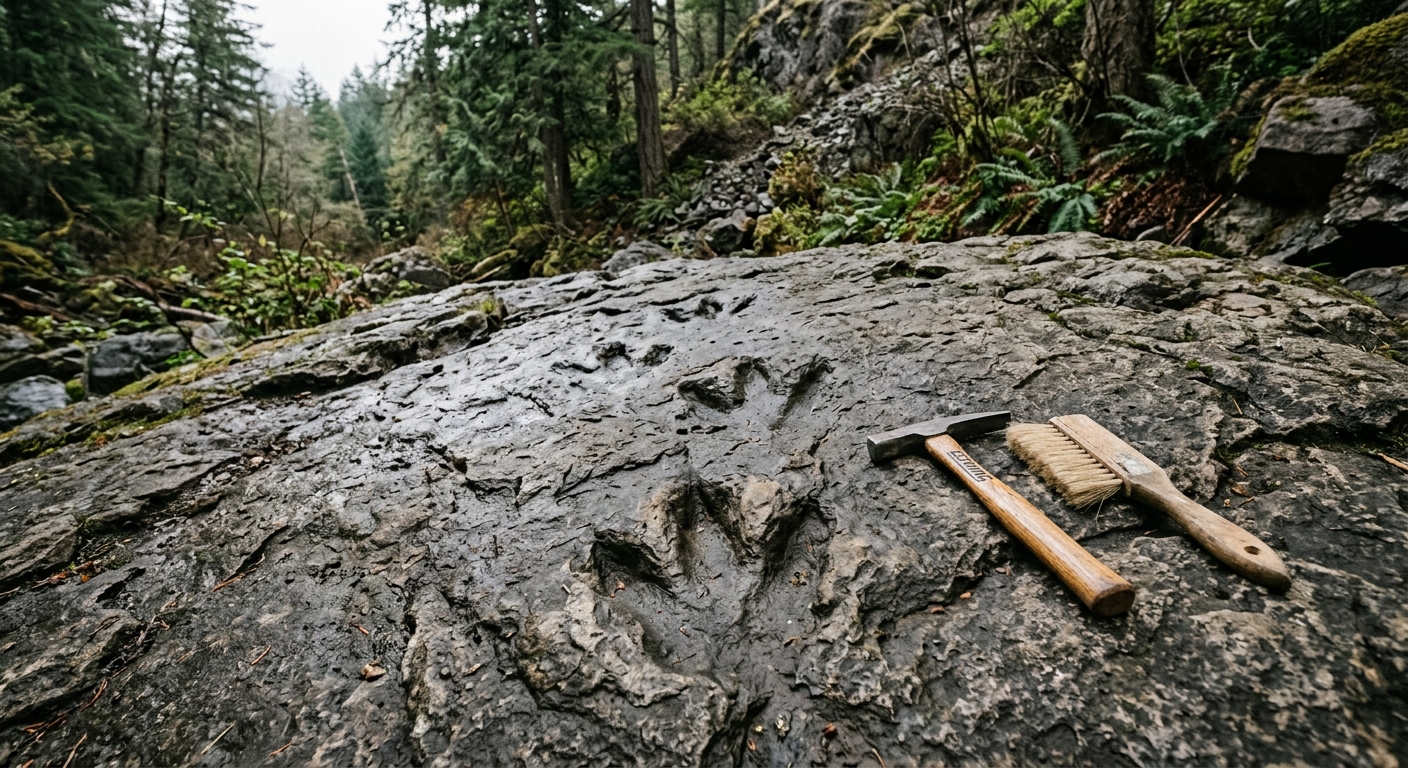
Earth scientist Guy Plint first identified the remarkable duck billed dinosaurs tracks in 1988 embedded in the Coniacian-aged rock formations surrounding Tumbler Ridge. The region, once a lush prehistoric delta adjacent to the vast Western Interior Seaway, now preserves the only known Canadian dinosaur tracks from the Coniacian age—spanning approximately 85 to 89 million years ago during the Late Cretaceous period.
A Window into Cretaceous Terrestrial Life
Researchers, including Plint and paleontologist Dr. Charles Helm, have determined that these dinosaur tracks are pivotal for understanding the shift in dominant herbivore species as ancient landscapes adapted to the emergence of flowering plants. The presence of these rare fossil footprints suggests that duck billed dinosaurs increasingly replaced the previously prevalent ankylosaur species, marking a major moment in dinosaur evolution.
Preservation and Study in Tumbler Ridge
Between 2022 and 2025, a series of coordinated expeditions led to the recovery of five individual tracks now preserved at the Tumbler Ridge Museum, establishing the area as a crucial hub for paleontology BC research. These prehistoric fossils offer an unusually detailed terrestrial sediment record, giving scientists an invaluable glimpse into ecosystem transitions during the cretaceous period—a time otherwise marked by limited terrestrial fossils in northern North America.
Implications for Dinosaur Evolution
The analysis of these tracks extends beyond mere identification, providing substantial data for ongoing studies of species turnover. The evidence gleaned from Tumbler Ridge supports theories concerning the adaptation of herbivore dinosaurs to rapidly changing environments and the rise of new plant life that transformed dietary habits along the margins of the seaway.
Connecting to Regional and Scientific Communities
For Toronto Metro’s academic and scientific network, this discovery reinforces Canada’s reputation for breakthrough contributions in paleontology. The findings from Tumbler Ridge serve as a critical case study, connecting local scholars and enthusiasts with international efforts to chart the ancient dynamics of prehistoric ecosystems. This research also underscores the importance of protecting fossil-rich sites to encourage future discoveries that may further unravel the mysteries of dinosaur migration and adaptation.
Enriching Scientific Understanding
The study of these unique prehistoric fossils continues to yield important context for understanding Cretaceous biodiversity across Canada. As researchers persist in their exploration of Tumbler Ridge and similar sites, the story of these dinosaur tracks deepens knowledge not just for paleontology BC circles, but also for educational institutions and the broader public throughout Toronto Metro and northern communities.