AI-generated illustration; not a photograph of the reported event.
- calendar_today October 30, 2026
Bike Lane Removal Completed on Bloor Street West
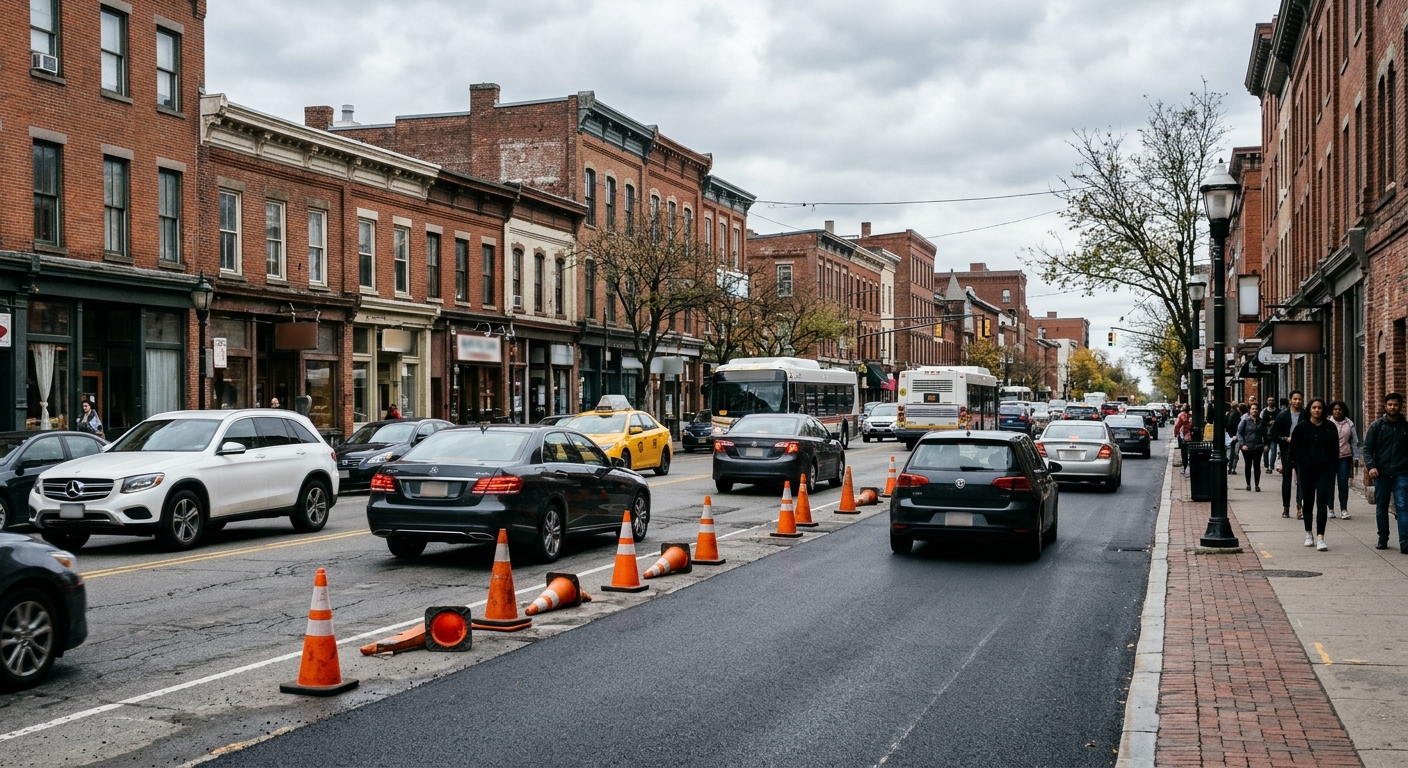
The Ontario government has announced the completion of work to remove bike lanes along a 1.2-kilometre section of Bloor Street West in Etobicoke. The stretch, between Clissold Road and Royal York Road, has seen the elimination of protected cycling infrastructure, with vehicle lanes reinstated in both directions. The project, initiated by the Doug Ford government, is part of a broader plan to restore road capacity on major Toronto arterial roads.
Provincial Rationale: Addressing Traffic Congestion
The province has argued that removing the bike lanes is necessary to improve vehicle flow and reduce traffic congestion in the area. "We were elected with a clear mandate to fight gridlock, restore traffic lanes and get drivers moving again, and that’s exactly what we’re doing," said Transportation Minister Prabmeet Sarkaria in a statement. Sarkaria emphasized that the government supports bike lanes in places where they do not exacerbate congestion, and that restoring road capacity on Bloor Street West aligns with the government’s commitment.
Details of Construction and Restored Road Capacity
According to the province, crews dismantled existing bike lane infrastructure, including precast curbs, delineators, signage, and bus pads. The construction also involved pavement repairs, resurfacing, new road markings, and updated traffic signage. The work aimed to ensure a smooth transition back to full vehicle lanes, reflecting the government’s focus on vehicular road usage in high-traffic corridors.
Public Reaction and Ongoing Debate
The removal has become a significant point of contention in Toronto’s ongoing discussion about cycling infrastructure. While some motorists and businesses have supported the project, it has faced strong opposition from cycling advocates, city officials, and road safety groups. Toronto Mayor Olivia Chow publicly criticized the removals as "outrageous" and questioned whether they would actually reduce congestion. Cycling advocates staged demonstrations, attempting to block construction and highlighting their concerns for cyclist safety.
Legal and Political Developments
The decision follows a legal process, with the Ontario Court of Appeal ruling in August that decisions about the design of public roads are ultimately matters of public policy for the provincial legislature. This legal clarity allowed the province to move ahead with plans affecting cycling infrastructure along several Toronto roads. The Bloor Street West corridor, in particular, has become a focal point for advocates who argue that the bike lanes provided a crucial east-west connection and protected vulnerable road users.
Broader Implications for Cycling Infrastructure
The Bloor Street West project is the first completed bike lane removal under the Ford government’s plan. In September, Ontario initiated a request for proposals to explore restoring vehicle lanes on other major routes, including sections of Bloor Street, Yonge Street, University Avenue, Queen’s Park, Queen’s Park Crescent, and Avenue Road. This ongoing review will also assess opportunities to modify or retain bike lanes in locations where congestion can be minimized.
Advocates Warn of Cyclist Safety Risks
Supporters of the removed bike lanes have warned that the loss of protected cycling corridors could make the area less safe for cyclists and discourage active transportation. In response to the removal and confrontations with police during protests, advocates installed a memorial bicycle sculpture along the corridor to underscore their concerns about potential negative consequences for cyclist safety.
Related coverage
Source: toronto.citynews.ca.