- calendar_today August 14, 2025
Community Colleges Train for the AI Frontier
While downtown Toronto fuels cutting-edge AI research, its outer metro—stretching through Etobicoke, North York, Scarborough, and Mississauga—is becoming the bedrock of Canada’s skilled AI labor force. The driving force? A wave of workforce development programs built around Nvidia’s technology.
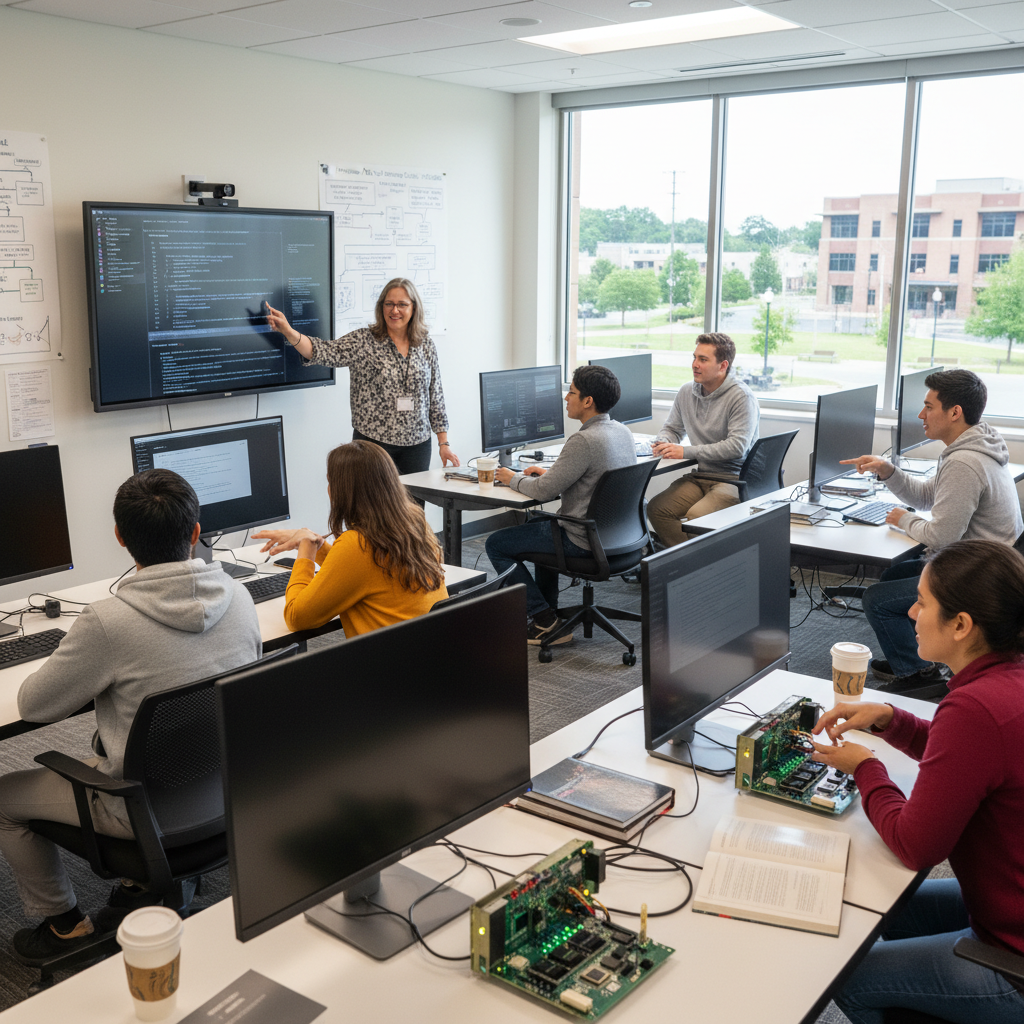
Seneca College, Centennial, and Humber College have all integrated Nvidia’s Deep Learning Institute (DLI) into their curriculums. Students are now learning how to optimize machine learning pipelines on CUDA, build real-time object recognition tools with Jetson modules, and run inference on the latest H100 GPUs.
“What used to be a four-year computer science pathway is now a one-year certificate with immediate hiring demand,” said an AI instructor at Humber College. Many of these graduates are being hired by logistics companies in Brampton and manufacturing firms in Vaughan that have begun adopting Nvidia-powered automation tools on factory floors.
Cities Use AI to Manage Infrastructure and Safety
Toronto Metro 2 municipalities are also becoming testbeds for civic AI innovation. Mississauga’s transportation department has started deploying Nvidia Jetson-powered traffic cameras that dynamically adjust signal timing based on congestion levels. According to city reports, early pilots showed a 12% reduction in rush-hour bottlenecks.
Meanwhile, in Scarborough, the local police department is testing Nvidia-supported computer vision systems for object detection in high-crime areas. While still controversial, early trials indicate increased response efficiency. Civil liberties groups, however, are pushing for strict oversight—particularly on data retention and facial recognition safeguards.
Etobicoke is investing in AI-based waste management sensors trained on Nvidia GPUs, helping route collection trucks more efficiently and reduce city emissions. These systems analyze real-time fill-level data across thousands of bins, a model now being evaluated by cities across Canada.
Healthcare and Education Bridge AI Gaps
Unlike central Toronto’s academic hubs, the Metro 2 region faces a steeper uphill climb when it comes to access and equity. But hospitals like Trillium Health Partners and Scarborough Health Network are beginning to level the field by investing in Nvidia-backed diagnostic platforms.
In outpatient clinics, AI-assisted diagnostic imaging—optimized through Nvidia’s Triton Inference Server—is being used to triage lower-priority cases, reducing wait times for underserved populations.
In public schools across North York and Brampton, educators are cautiously exploring Nvidia-powered adaptive learning platforms that personalize curriculum delivery using real-time student performance data. The Peel District School Board recently launched a pilot for math and science learning modules that adjust difficulty dynamically based on student engagement—though concerns about screen time and data privacy remain.
Manufacturing and Logistics Take AI to the Warehouse Floor
Where Metro 1 houses AI startups and medical breakthroughs, Metro 2 hosts the warehouses and industrial centers that will adopt these innovations at scale. In Brampton and Vaughan, distribution centers are beginning to retrofit Nvidia Jetson-based edge AI systems to monitor package flow, detect defects, and predict delays across supply chains.
These systems, designed to run with minimal latency on site—have helped reduce human error and labor costs. Companies like Purolator and Canadian Tire have hinted at plans to expand their AI infrastructure, citing the need to stay competitive with U.S. automation.
Challenges of Equity, Housing, and Energy Usage
But with AI adoption expanding rapidly, not all residents are optimistic. A key concern is that AI investments—and Nvidia-powered productivity gains—aren’t being distributed evenly. Jobs lost to automation are not always replaced with equal-paying roles, especially in non-tech sectors like food services or manual labor.
Electricity consumption is another rising concern. As more AI servers go online in regional data centers, hydro providers are under pressure to meet increased demand. Toronto Hydro has already flagged power-intensive AI operations as a priority for smart grid planning in 2026.
Housing affordability also looms large. As companies invest in Metro 2 suburbs, housing prices and rents are beginning to climb. Community advocates warn that if Nvidia-powered AI growth isn’t matched by fair policy, the same inequalities seen in other tech booms may repeat.