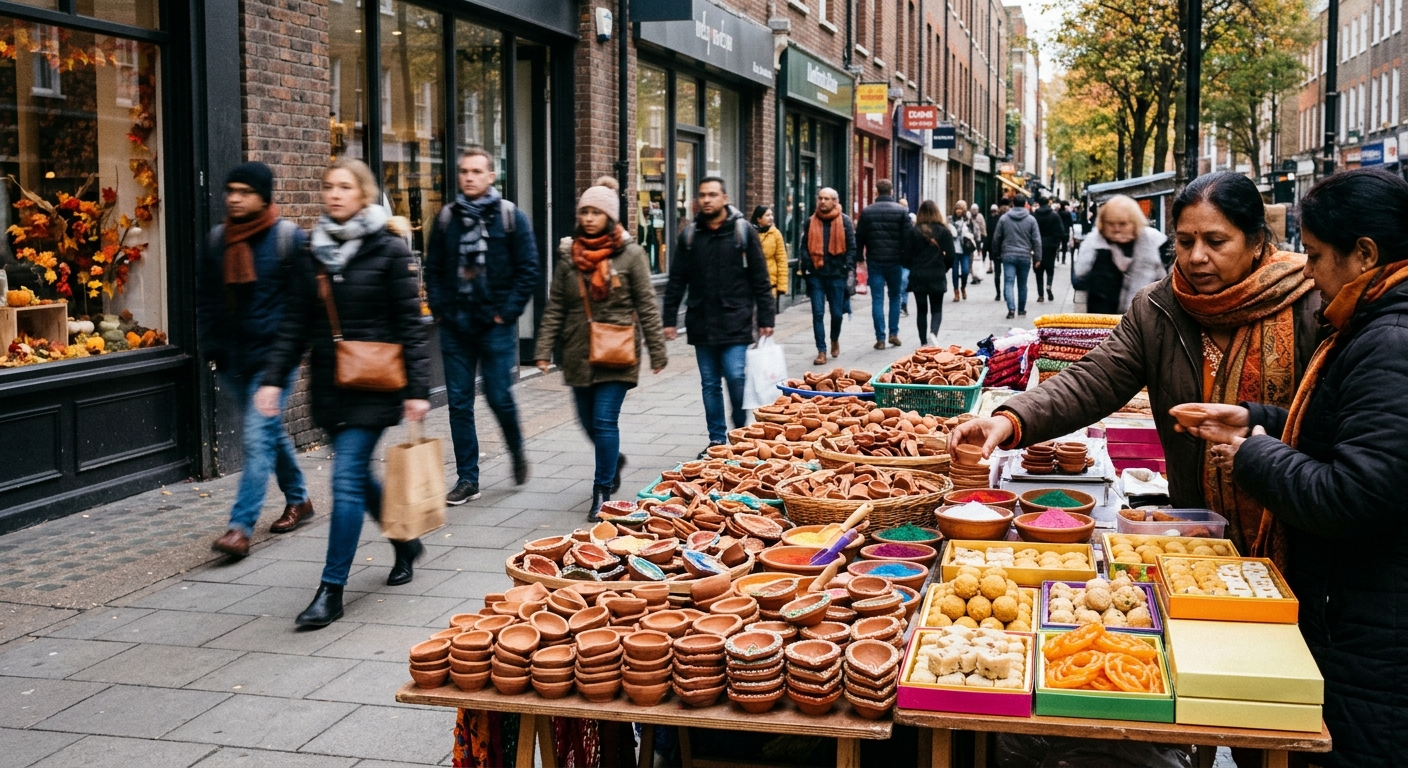
AI-generated illustration; not a photograph of the reported event.
- calendar_today November 8, 2026
Diwali's Expanding Influence in Canada
Diwali, known as the Festival of Lights, is celebrated by millions around the world, and its influence in Canada is growing steadily. Traditionally marked as a peak period for shopping and celebration in India, Diwali is now contributing to Canada’s festive economy, shaping retail behavior and cultural events across the country.
Retail Trends and Festival Promotions
The season leading up to Diwali has become a significant period for businesses, echoing the commercial boom typically seen in India. Big brands and advertising agencies often leverage the festive spirit with product launches and creative storytelling. In Canada, this trend is visible among retailers and car dealerships. For example, several Greater Toronto Area (GTA) car dealerships, such as Performance Auto Group in Ontario, offer special purchase incentives, like a complimentary one-ounce silver coin with every vehicle purchase or lease during the festival period.
Shopping Patterns and the Canadian Diaspora
Darshan Maharaja, an Indo-Canadian cultural commentator, notes that Diwali is now firmly part of the Canadian shopping calendar. Major retailers provide promotions aligned with Diwali shopping habits, including clothes, gifts, and sweets. Maharaja remarks that, "the Christmas spending season starts one month early because of Diwali." The festival is also preceded by a month of other celebrations, such as Dhanteras—the Day of Wealth—when families often purchase gold or silver. Traditional sweets, known as Mithai, are commonly exchanged among friends and families.
Impact of the Economic Context
Despite current affordability challenges, Diwali’s importance endures for many Indo-Canadian families. Vikram Rana, owner of Rana Jewelers in Brampton, observes a shift in consumer habits: "People used to buy bigger products, now they are buying smaller things, but they are buying more of them." However, some small businesses such as South Asian restaurants in downtown Toronto report decreased orders—by as much as 50 percent—due to factors like rising costs and fewer international students, according to business owner Soumya.
Cultural Events and Tourism in Ontario
Data from the 2021 census show that approximately 828,000 people in Canada identify as Hindu, 772,000 as Sikh, and 8,300 as Jain—communities for whom Diwali and related festivals hold significant meaning. Alongside Diwali, Sikhs observe Bandi Chhor Divas and Jains celebrate Mahavir Diwas, all emphasizing traditions of light and renewal.
Ontario’s Ministry of Tourism, Gaming and Culture highlights that the province’s diversity attracts visitors who patronize local businesses. Since 2018, about $520,000 in funding from Experience Ontario has supported Diwali-related festivals and events, benefiting local economies through increased tourism and spending.
Major Diwali Celebrations in the GTA
Festivities in Toronto began weeks ahead of Diwali. Nathan Phillips Square hosted the Diwali Festival of Lights on October 25, featuring music, dance, food, and clothing vendors, and concluding with fireworks. Mel Lastman Square celebrated with more than 150 performers and 50 vendors. In Brampton, home to Canada’s largest South Asian population, a Diwali Mela is taking place on November 8, further highlighting the festival’s enduring importance to the community.
Source: toronto.citynews.ca.