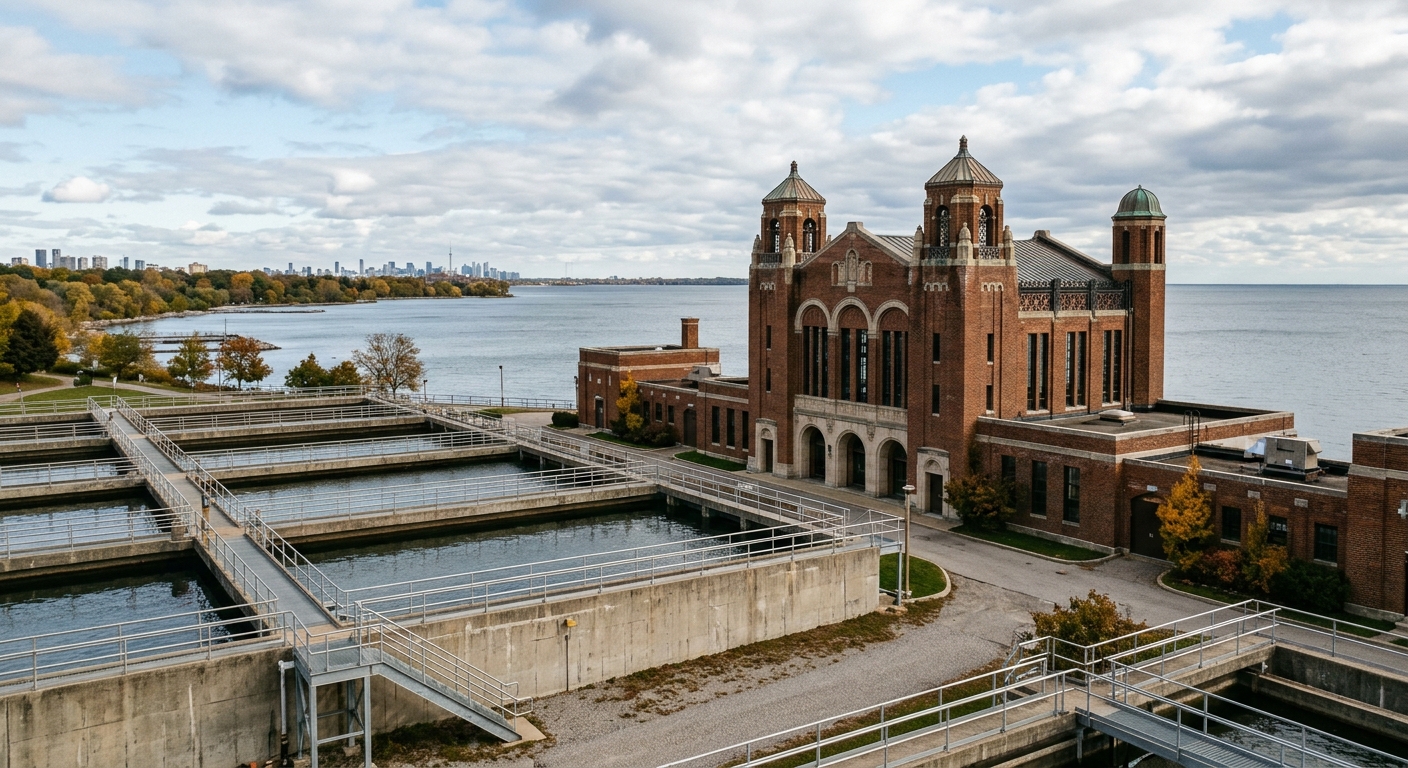
AI-generated illustration; not a photograph of the reported event.
- calendar_today October 21, 2026
David Suzuki Voices Opposition to Bradford’s Water Plan
World-renowned environmentalist David Suzuki spoke out on Wednesday against Toronto mayoral candidate Brad Bradford’s proposal for the city’s water management, expressing concerns over the plan’s implications for public control and the potential commodification of water. Suzuki made his comments at a press conference held in support of Bradford’s opponent, Olivia Chow.
Bradford’s Proposal for Toronto Water
Bradford’s plan involves restructuring Toronto Water into a municipal corporation, similar to the organizational framework of Toronto Hydro. According to Bradford, this model would allow Toronto Water to take on debt to fund infrastructure projects, reducing reliance on the existing revenue from water bills. Bradford claims that this shift would enable a reduction in water bills for Toronto residents by up to 25 percent, estimating an average $300 annual savings per household through a cut on the first $1,500 of charges.
Privatization Concerns Emerge
Critics have argued that changing Toronto Water into a municipal corporation could open the door to water privatization and eventual increases in water prices. Suzuki strongly opposed the idea, stating, “I think it’s crazy for a person saying they want to be mayor of the city and one of their [ideas] is potential privatization of something like water.” He emphasized that water is a basic, sacred need and should not be treated as an opportunity for profit. Suzuki urged voters to protect Toronto’s water resources from potential exploitation.
Olivia Chow and Council Concerns
Olivia Chow, Bradford’s chief opponent, echoed Suzuki’s criticism, warning that Bradford’s plan would “hand control of water to the Ford government.” City Councillor Gord Perks also raised concerns that, under the proposal, the province could appoint the board of directors for the new municipal corporation, potentially shifting control of water pricing away from the City of Toronto. Perks explained that board members would have a fiduciary duty to the corporation, not necessarily to Toronto, which could result in decisions favoring private investment.
Bradford Team Defends Public Control
In response to criticism, a spokesperson for Bradford emphasized that provincial law prohibits private ownership of Toronto’s water. According to Laryssa Waler, “Provincial law bans private ownership of Toronto’s water. Under the Water and Wastewater Public Corporations Act, as amended this May, shares in a municipal water corporation can only be held by a municipality, the Province, or the Government of Canada. Private ownership is prohibited in the statute itself.”
Waler further explained that Bradford intends to reinforce public control by introducing municipal bylaws ensuring that the city remains the sole shareholder and that private investment is barred. Bradford’s team also specified that, under the plan, City Council would appoint the board of directors and set guidelines for water rates, drawing a comparison to the governance of Toronto Hydro.
Past Lessons and Community Impact
Chow highlighted the experience of Hamilton in the mid-1990s, where water privatization was later reversed after failing to meet community needs. She cited this as a cautionary tale against similar approaches in Toronto.
Concerns about future water prices persist. Chow maintains that Bradford’s plan could ultimately lead to unaffordable water bills for seniors and vulnerable groups on fixed incomes, while Bradford insists his plan will lower costs.
Broader Debate Over Essential Services
The debate over the management of Toronto Water underscores fundamental questions regarding the stewardship of essential services, public control, and the role of private interests. Suzuki concluded by asserting that viewing water as a potential source of profit “makes no sense,” emphasizing the need to prioritize the common good over financial motives in decisions about vital public resources.
Source: CityNews Toronto
Source: toronto.citynews.ca.