- calendar_today August 7, 2025
Industry Voices Call for Tariff Relief Before It’s Too Late
The board game industry has a reputation for being creative, having a close-knit community, and not being that lucrative. But, as if to prove all three of those adjectives simultaneously, this week, designer Jamey Stegmaier, known for games like Scythe and Wingspan, was shocked and dismayed to learn that all Chinese-made goods coming into the U.S. would be taxed at a hefty 54 percent.
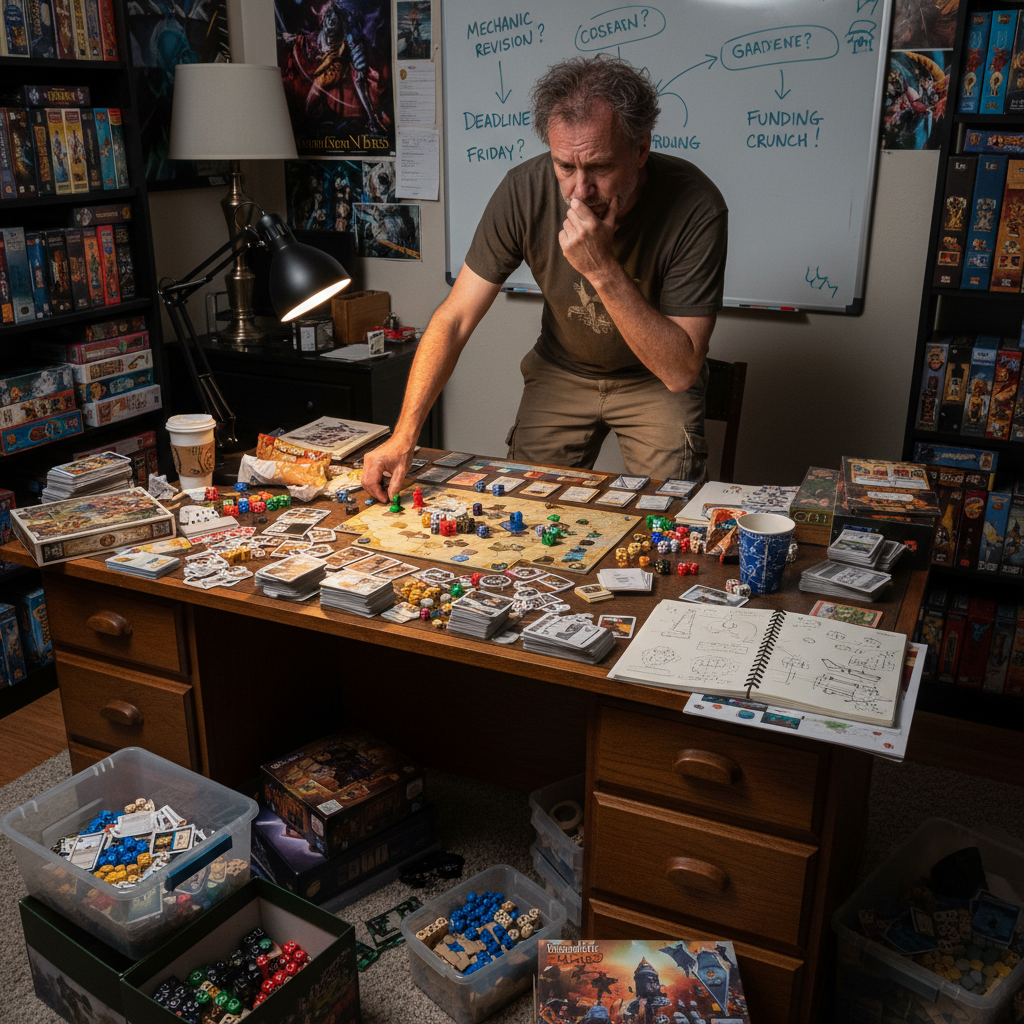
In a blog post, Stegmaier opened up about his mood and reaction to this stunning news. “Last night I tried to work on a new game I’m brainstorming, but it’s tough to create something for the future when that future looks so grim,” he wrote. “I mostly just found myself staring blankly at the enormity of the newly announced 54 percent tariff.” It’s a refreshingly personal statement from an industry veteran responsible for some of the most popular games in the world, and one that will resonate with many publishers and designers right now.
In particular, many took note of his statement about what the tariff means for the community. “Within a few months, US companies will lose a lot of money and/or go out of business,” Stegmaier wrote. “And US citizens will suffer from extreme inflation.”
A Game-Making Industry, Broken
First, it’s important to understand why the tariff is such a drastic change. America may not be the place that springs immediately to mind for game manufacturing, but there are board game factories and game card printers in countries like Germany and France. Germany, in particular, is considered the spiritual center of the modern tabletop scene.
China, however, is where most people go for full-service game manufacturing. This means not only getting your printed cardstock and boards made, but also has long been the easiest place for board game companies to find custom plastic miniatures, wooden tokens, custom die-cut boards, specialty dice, and other elements required to make a modern board game. The country’s factories have been able to provide both the quantity and the small-run customization that Western companies need.
Building those components in-house in the United States is possible in theory, but a joke in practice. Stegmaier himself said that he was once quoted $10 by a U.S.-based manufacturer for just the empty box that a game comes in. In China, that same $10 could cover the cost of both making and packaging a finished game.
Hence, the existential crisis brought on by the tariff. Prices are higher, but most board game publishers in the U.S. are small to mid-sized companies that work on very thin margins. Most orders for new games are already in production, and to suddenly need to cover a 54 percent cost increase without warning is economically disastrous.
Comments From Company Owners
Meredith Placko, CEO of Steve Jackson Games and wife of creator and co-founder Steve Jackson, had similar things to say in her blog post. The publisher, best known for games like Munchkin, uses offshore manufacturing like almost everyone else in the business, and Placko confirmed that she’d already received quotes for increased prices.
“I’ve heard from publishers that some people ask, ‘Why not manufacture in the US?’” she wrote. “I wish we could. The truth is that the infrastructure to support full-scale boardgame production—specialty dice making, die-cutting, custom plastic and wood components—doesn’t meaningfully exist here yet. I’ve gotten quotes. I’ve talked to factories. Even when the willingness is there, the equipment, labor, and timelines simply aren’t.”
Placko also suggested that it was bigger than a mere disruption in logistics. “This isn’t just a policy change,” she wrote. “It’s a seismic shift.”
Rob Daviau, co-founder and publisher of Restoration Games, as well as designer of the hit game Pandemic Legacy, has also been vocal, both on social media and in interviews, for months now. As early as February, Daviau was warning that the proposed tariffs would cause a “great collapse in the hobby gaming market in the US.”
Retailers and Gamers Left High and Dry
Gamers themselves will also be negatively affected, though it may take time for the direct impact to hit home. In the short term, there’s a good chance that prices for new games will increase, especially as companies try to recoup the sudden increase in production costs. There may also be a glut of lower-quality games, as companies try to use less-expensive materials to keep their prices the same. It’s also possible that some companies will limit or slow their release schedules to avoid the brunt of the costs.
Retailers are also in danger, especially local game stores that have already been struggling with online competition. With gamers potentially turning to the games they already own (many tabletop enthusiasts jokingly refer to the games on their shelves that they haven’t played yet as their “shelves of shame”) or buying online for cheaper prices, they could also feel the pinch.
“Worst-case, we’ll see significant store closures as a result,” Stegmaier added in a follow-up post.
Potential Solutions, Slight Hopes
There are possible workarounds, such as having your products shipped to the U.S. by a third-party distributor from outside the country. The board game market in Europe, for instance, may be less affected by the tariff. It’s not much of a solution for U.S. companies, though, as Stegmaier points out that around 65 percent of his own company’s sales are in the U.S.
What’s more, as Stegmaier points out, there are limits to what can be done. For games that are still in the design or early production phase, it may be possible to adjust your budget and plan to take the tariff into account. But if your games are already fully manufactured in China, en route to the U.S., and you find out about the tariff mid-shipment, there’s no going back.
In other words, as the owner of California-based Solis Game Studio, Chris Solis points out, there’s not much that companies can do to prepare.
“I have 8,000 games leaving a factory in China this week and now need to scramble to cover the import bill,” Solis tweeted.
A Fractured Future
Groups like the Game Manufacturers Association (GAMA), which advocates for board game publishers and the industry in general, have been active in trying to fight back and push against the tariff. It’s too early to tell how effective that work will be, and so far, there’s been little to no indication that the increased tariff will be revoked or rolled back.
As for the state of the industry? It’s not looking great. The tariff means the board game industry faces one of the biggest upheavals and potential shakeups since the last recession and the rise of crowdfunding. For an industry that has prided itself on optimism and making people happy, that’s a jarring, worrying turn of events.