- calendar_today August 24, 2025
.
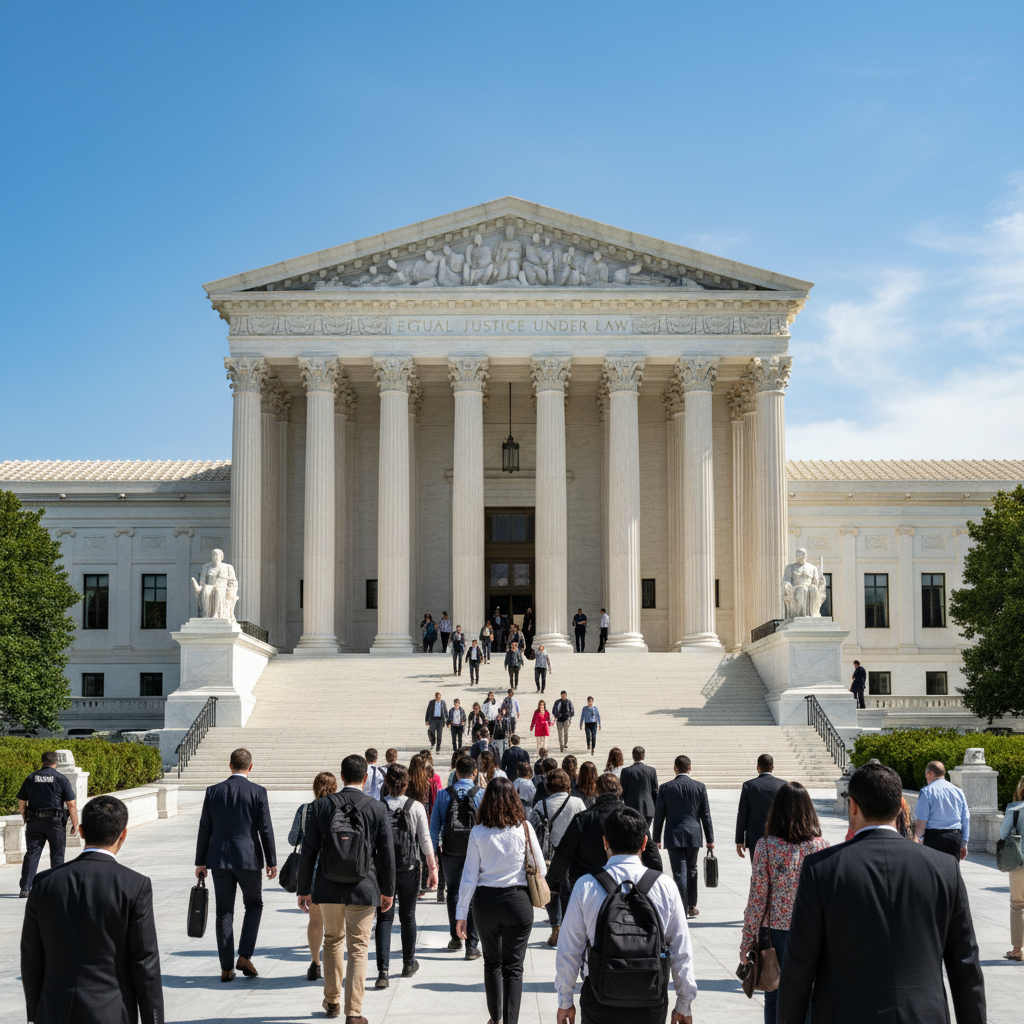
The Trump administration on Tuesday asked the Supreme Court to put a hold on a major appeals court decision that said President Trump can block nearly all U.S. foreign aid disbursements, which the government needs to begin spending before the end of September.
The emergency appeal filed late Tuesday evening by U.S. Solicitor General D. John Sauer means the future of U.S. Agency for International Development (USAID) spending could again wind up in front of the high court for the second time in six months. The request also asks the Supreme Court to stop an order from a lower court judge in Washington, D.C., that requires the administration to begin spending a billion dollars per month in USAID grants.
The battle over USAID funds for 2020 centers on nearly $12 billion in aid that Trump must spend before the end of September. Trump, back in office since January, signed an executive order on his first day back, instructing the federal government to suspend nearly all foreign aid payments. The president’s order, which he said would continue to go after “waste, fraud, and abuse” in foreign spending, led quickly to a court fight. In February, Judge Amir Ali of the U.S. District Court in Washington, D.C., ruled that the president must release the money for projects that Congress had already approved spending. Judge Ali’s decision required the Trump administration to resume payments on billions of dollars in USAID grants.
Appeals Court Judge Vacates Order That Required Trump to Resume Payments on USAID Grants
The Trump administration responded with a legal challenge of its own. A three-judge panel on the U.S. Court of Appeals for the D.C. Circuit took up the case earlier this month. In a 2-1 decision, the appeals court said Judge Ali’s injunction must be vacated.
Judge Karen L. Henderson, an appointee of George H.W. Bush, was the author of the majority opinion. Henderson said that the plaintiffs in the case, a collection of foreign aid groups that want their grant money payments to resume, had no proper “cause of action” for suing the administration. In other words, she said that the foreign aid groups lacked the necessary standing to bring their claims in federal court. Henderson wrote that the plaintiffs did not have a legal right, under the doctrine of impoundment, to challenge Trump’s decision to rescind the money.
The appeals court’s decision was a major win for the Trump administration. But the D.C. Circuit has yet to issue a “mandate,” a formal order enforcing its decision. That effectively left Judge Ali’s order, which laid out a detailed payment schedule for the government, still in effect. The government, in turn, is racing to avoid being forced to disburse $12 billion in USAID funds before the fiscal year expires at the end of September.
The Legal Fight Over $12 Billion in Foreign Aid Funds
In the Tuesday night filing with the Supreme Court, U.S. Solicitor General Sauer said the administration will be required to “rapidly obligate some $12 billion in foreign-aid funds” if the justices do not intervene before the end of September. But Sauer and the administration argue the courts should not be determining the outcome of the fight. In the court filing, Sauer said that even if Congress did not like Trump’s foreign aid “policy decisions,” it was “free to adjust the terms of the Appropriations” if necessary.
“Congress did not upset the delicate interbranch balance by allowing for unlimited, unconstrained private suits,” Sauer wrote. “Any lingering dispute about the proper disposition of funds that the President seeks to rescind shortly before they expire should be left to the political branches, not effectively prejudged by the district court.”
The plaintiffs in the case, the foreign aid groups affected by Trump’s order, argue the opposite. The president, they say, does not have the authority to stop a congressionally mandated money once it has already been appropriated. They cite a law known as the Impoundment Control Act (ICA), which was passed in the 1970s to prevent executive overreach in federal spending, and the Administrative Procedure Act as the key legal authorities for their lawsuit.
The case also raises thornier questions about the scope of executive power in this arena. If Trump wins, it will help establish a presidential authority to rescind or delay funding even after Congress has appropriated the money. But a decision for the plaintiffs would further curb executive discretion when it comes to how money is spent once appropriated by Congress.
The U.S. Supreme Court has already been involved in this issue, ruling in an earlier version of this case earlier this year. The decision, which also only went 5-4, was narrower. Now, with billions of dollars and a fast-approaching fiscal deadline at stake, the issue of executive power in budgeting is back before the justices.