- calendar_today August 20, 2025
.
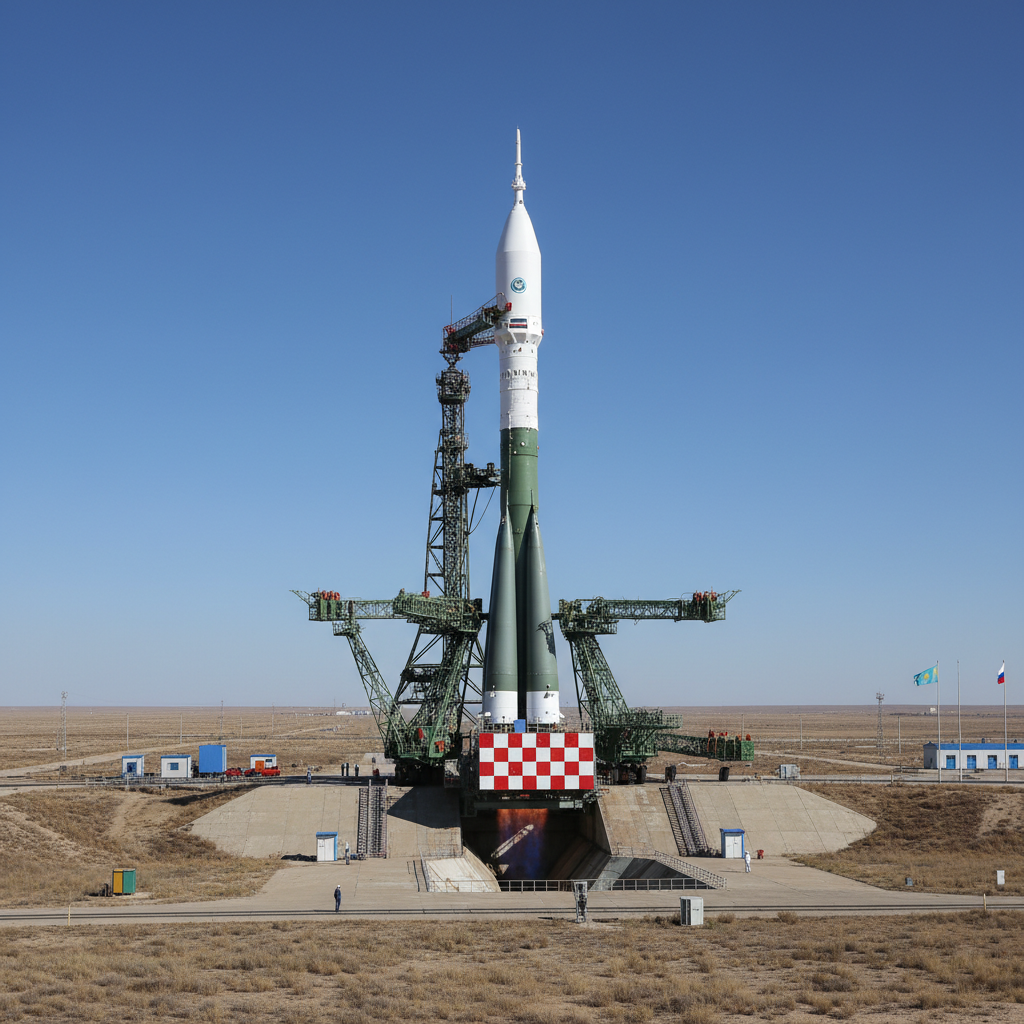
Russia plans to launch its new rocket Soyuz-5 before the end of this year. Dmitry Bakanov, the director of the Roscosmos space agency, made the announcement in a recent interview with state media agency TASS.
“Yes, we are planning for December,” Bakanov told TASS. “Preparations are at the stage of about 95 percent for the first liftoff of Soyuz-5.” The rocket will launch from the Baikonur cosmodrome in Kazakhstan if the test flight proceeds as planned. The vehicle, which has been in development for over a decade, is set to make its maiden voyage sometime this year. Roscosmos plans to conduct several tests before putting Soyuz-5 into service. But that launch contract is not expected until 2028.
The Soyuz-5, also known as Irtysh, does not represent a revolutionary departure in rocket design. Instead, the project is largely a domestic variant of the Zenit-2 rocket, which debuted in the 1980s. The Zenit was designed by Ukraine’s Yuzhnoye Design Bureau, and assembled in Ukraine with rocket engines provided by Russia. This cross-border partnership was a rare example of cooperation in the post-Soviet aerospace industry. The 2022 Russian invasion of Ukraine has, of course, ended that arrangement. In late 2023, Russian forces targeted the Ukrainian production facility for Zenit.
Roscosmos’s solution was to re-engineer the rocket for domestic production as Soyuz-5. The main change in this process was the elimination of Ukrainian involvement. All major components of Soyuz-5 are manufactured in Russia, which from Moscow’s point of view is a strategic victory. The rocket program puts an end to the nearly 20-year reliance on Ukraine. It also, at least on paper, displaces the long-serving Proton-M heavy rocket from the production line.
A Bridge Between Past and Future
On paper, the Soyuz-5 is a medium-lift launcher. It can lift about 17 metric tons into low-Earth orbit (LEO). These specifications are comparable to Zenit, but for slightly larger propellant tanks. The core engine of Soyuz-5 is the RD-171MV, a variant of an older design.
In the 1980s, this engine powered the Energia rocket booster. Energia was the launch vehicle for Buran, the Soviet Union’s short-lived foray into reusable space shuttles. The current RD-171MV is the newest variant of this engine and the most powerful Russian-made liquid fuel engine in use today. The new model is most notable for not having any Ukrainian components, unlike previous generations. The engine uses kerosene and liquid oxygen as fuel. This combination produces more than three times the thrust of NASA’s Space Shuttle main engine.
At the same time, Soyuz-5 is an expendable rocket. In that respect, the vehicle is an anachronism. Newer and more advanced competitors, like SpaceX’s Falcon 9, are optimized for reusability. As such, it remains to be seen if Soyuz-5 will ever be able to hold a significant market share in the international launch industry.
Nonetheless, the Soyuz-5 has an important role to play for Roscosmos. In the current budgetary situation, it is next to impossible to develop a new rocket from scratch. The planned reusable Amur rocket, also known as Soyuz-7, could potentially fulfill that role. It is being developed with a reusable first stage and methane engines, and could be priced to compete with SpaceX. As it stands now, Amur is not expected to be ready until at least 2030.
That leaves Soyuz-5 as a bridge to the future. It will allow the Russian space program to make tangible progress, even if it is using outdated technology.
As for the commercial prospects, however, the outlook is less rosy. In the last decade, the international launch industry has evolved significantly. Not only are SpaceX and Chinese launch providers able to offer more attractive prices, they are also more flexible in their service. Russia’s current commercial launcher lineup is rather sparse. Soyuz-2 rockets are available for crewed missions, while the Angara family is used for heavier payloads. But neither product has established a significant foothold in the international market. It is unclear if Soyuz-5 will be able to change that situation.
Nonetheless, the fact that Roscosmos has come this far with Soyuz-5 in the first place is remarkable. Sanctions and an extremely tight budget due to war expenditures are not the best of starting conditions for a new rocket. A successful test flight in December would be a demonstration that Russia can still put up new hardware. Soyuz-5 may not change the rules of the game when it comes to rocket design. But for Russia it is a political and industrial statement. It is one more step towards self-sufficiency and a bridge to the next stage, whatever that may be. Whether Amur or an as-yet-unknown future generation of rockets.