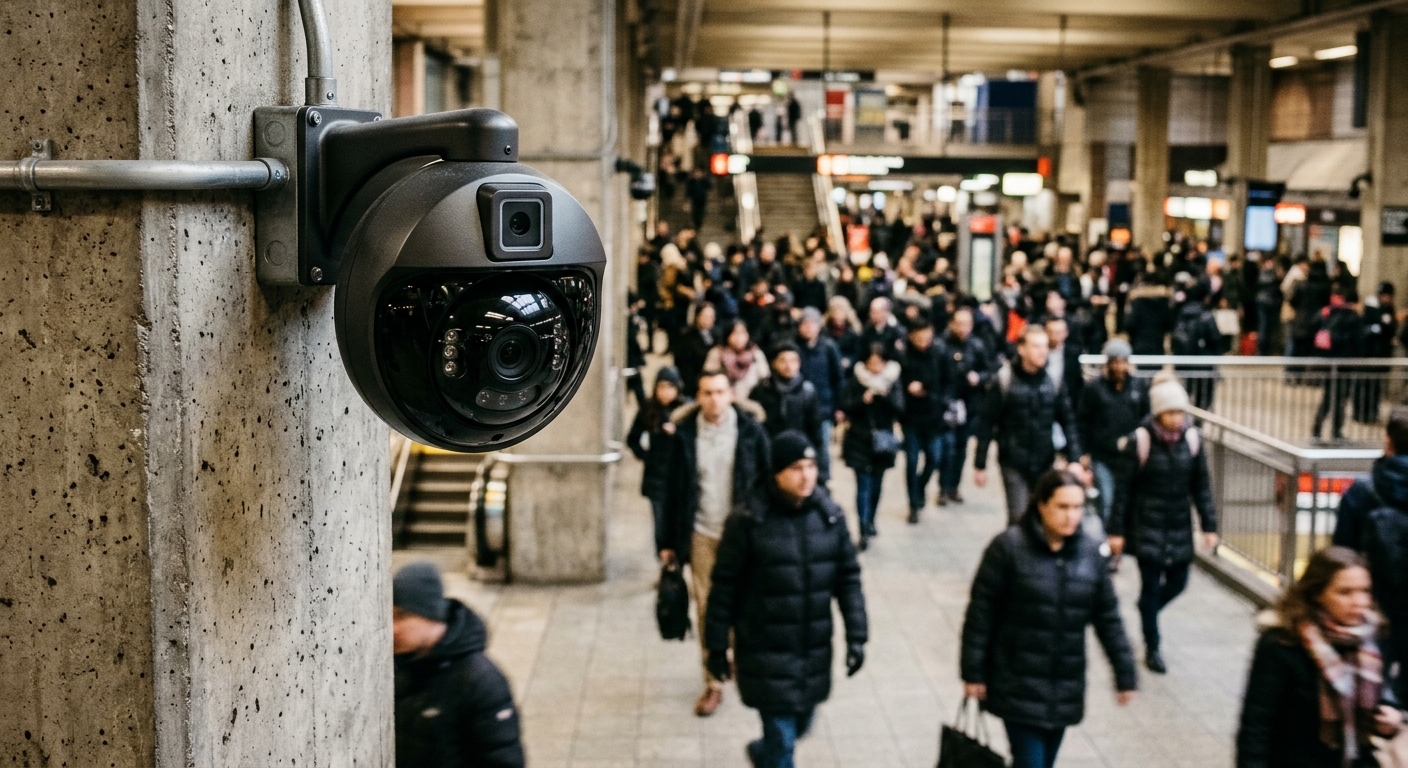
AI-generated illustration; not a photograph of the reported event.
- calendar_today November 12, 2026
Facial Recognition and the Cost of Convenience
Facial recognition technology is often promoted as a means of enhancing convenience and speeding up security checks. However, this ease of use may bring significant trade-offs, particularly concerning privacy and personal freedoms.
The Rise of Biometric Surveillance in Security Systems
Biometric surveillance, which includes facial recognition, has become increasingly prominent within security systems adopted by government agencies. These systems are widely used across areas such as border patrol, immigration security, and policing technology. The integration of these technologies has led to the collection and analysis of unique personal identifiers, specifically individuals' facial features converted into data.
Where Choice and Consent Meet Security
One of the main concerns surrounding biometric surveillance is the issue of consent. As facial recognition becomes a core component of security protocols, individuals often have little choice but to comply. Participation in these systems can feel non-negotiable, especially when it is linked to crucial functions, such as passing through border checkpoints or interacting with law enforcement.
Expert Insights on Data Collection and Personal Freedoms
On The Big Story podcast, host Maria Kestane discussed these pressing issues with Aaron Tucker, an author and associate professor at Memorial University of Newfoundland. Their conversation explored the implications of mandatory participation in facial recognition and questioned who sets the standards for when and how such technologies are deployed. They raised important topics about how consent is managed when one's face becomes a data point, and how regulations—or lack thereof—impact personal freedoms.
Impacts on Border Patrol, Immigration, and Policing
Government agencies' use of facial recognition and biometric surveillance extends into border patrol and immigration security systems. Such applications can mean that life opportunities, personal freedoms, and even the concept of consent are subject to the priorities and thresholds defined by the institutions controlling these technologies. This situation gives rise to ongoing debates about privacy concerns, data protection, and the long-term consequences of normalizing pervasive surveillance mechanisms.
Looking Forward: Navigating Technology and Consent
As facial recognition and related biometric surveillance methods continue to spread, questions about consent issues, privacy concerns, and the potential compromise of personal freedoms will remain central to public discourse. While these tools may offer efficiencies for government agencies, their deployment prompts vital discussions about where lines must be drawn to protect individual rights in a data-driven world.
Source: toronto.citynews.ca.