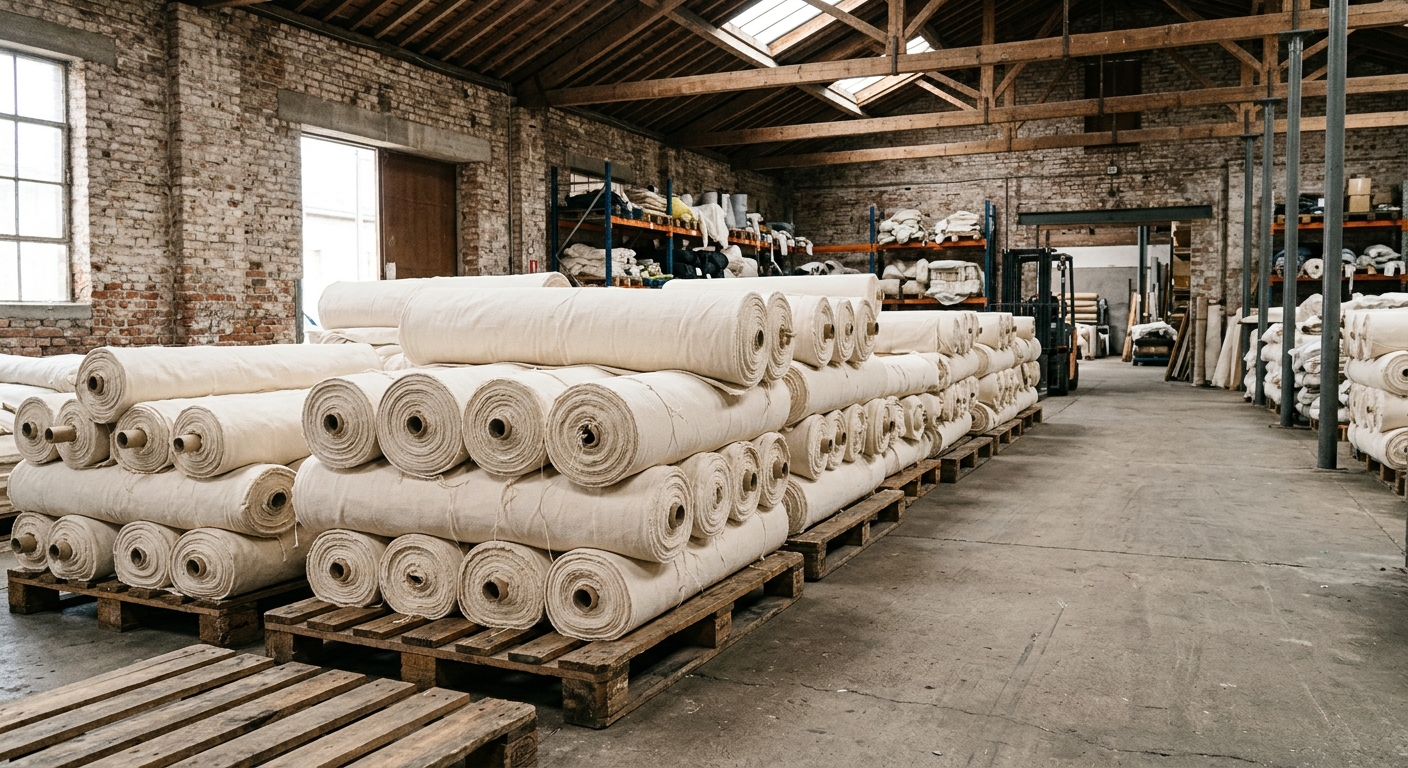
AI-generated illustration; not a photograph of the reported event.
- calendar_today November 11, 2026
Canadian Textile Maker Responds to Tariffs with U.S. Expansion Plans
A Toronto-based textile manufacturer, Fine Cotton Factory Inc., is preparing to expand operations into the United States, reflecting the lasting impact of the ongoing trade war and recent U.S. tariffs on Canadian goods. The move illustrates growing concerns about trade uncertainty and the stability of cross-border supply chains in the Canadian manufacturing sector.
Fine Cotton Factory Faces Tariff Impact
Fine Cotton Factory Inc., which produces fabrics used in clothing, mattresses, and bedding at its Toronto mill, relies on U.S. customers for approximately half of its sales. According to Skip Kann, the company’s executive vice-president of sales and marketing, U.S. tariffs of up to 50 percent on select products dramatically reduced sales as American buyers delayed orders and drew down their inventories. Although orders have started to recover, the persistent uncertainty over the Canada-U.S. trade relationship has pushed the company to consider a larger presence south of the border.
Laying Groundwork for Production Expansion
To mitigate the effects of tariffs on finished products, Fine Cotton Factory has begun shipping unfinished fabrics to U.S. contractors for further processing. This approach not only reduces immediate tariff exposure but also sets the stage for a broader expansion within the American market. Kann stated that the company plans to open a U.S. warehouse as its first step, with equipment sourcing and production commencement expected early next year. Even if tariffs are removed or a new trade agreement is reached, Kann expressed doubts that customer confidence in the Canadian supply chain would fully recover, noting, “There’s been damage done to the relationship between the U.S. and Canada.”
Trade Uncertainty Influences Industry Decisions
Pau Pujolás, associate professor of economics at McMaster University, warned that persistent doubts over cross-border trade reliability could influence manufacturers' decisions about where to invest over the long term. According to Pujolás, the mere fear of future trade disruptions is sufficient to drive businesses toward suboptimal decisions, including relocating production to mitigate risk. He emphasized that uncertainty itself is a significant challenge: “The worst thing that you can do to a bunch of business decision-makers is to tell them policies may or may not change.”
Manufacturing Investment Trends Remain Cautious
When U.S. tariffs took effect in March 2025, Canadian manufacturers, including some in the textile industry, opted to put off expansion plans and reconfigure supply chains as a protective measure. According to Ari Van Assche, a professor of international business at HEC Montréal, some companies have now reached a point where further delays are untenable. While he is aware of manufacturers considering new American facilities, he observed that the broader data does not yet show a significant trend of Canadian manufacturing investment relocating to the United States. Statistics Canada reports that Canadian direct investment in the U.S. slightly decreased by the end of 2025. Nevertheless, Van Assche cautioned that if trade uncertainty persists, more firms may follow Fine Cotton Factory’s example and accelerate U.S. expansion plans.
Lasting Effects on the Canadian Manufacturing Sector
As trade tensions continue, individual Canadian companies’ responses—like those of Fine Cotton Factory—may foreshadow broader changes in the sector. The uncertainty surrounding trade policies and supply chain disruptions has already led some manufacturers to rethink their long-term strategies, with potential consequences for both investment patterns and the textile industry as a whole.
This report by The Canadian Press was first published Nov. 11, 2026.
Related coverage
Source: toronto.citynews.ca.