
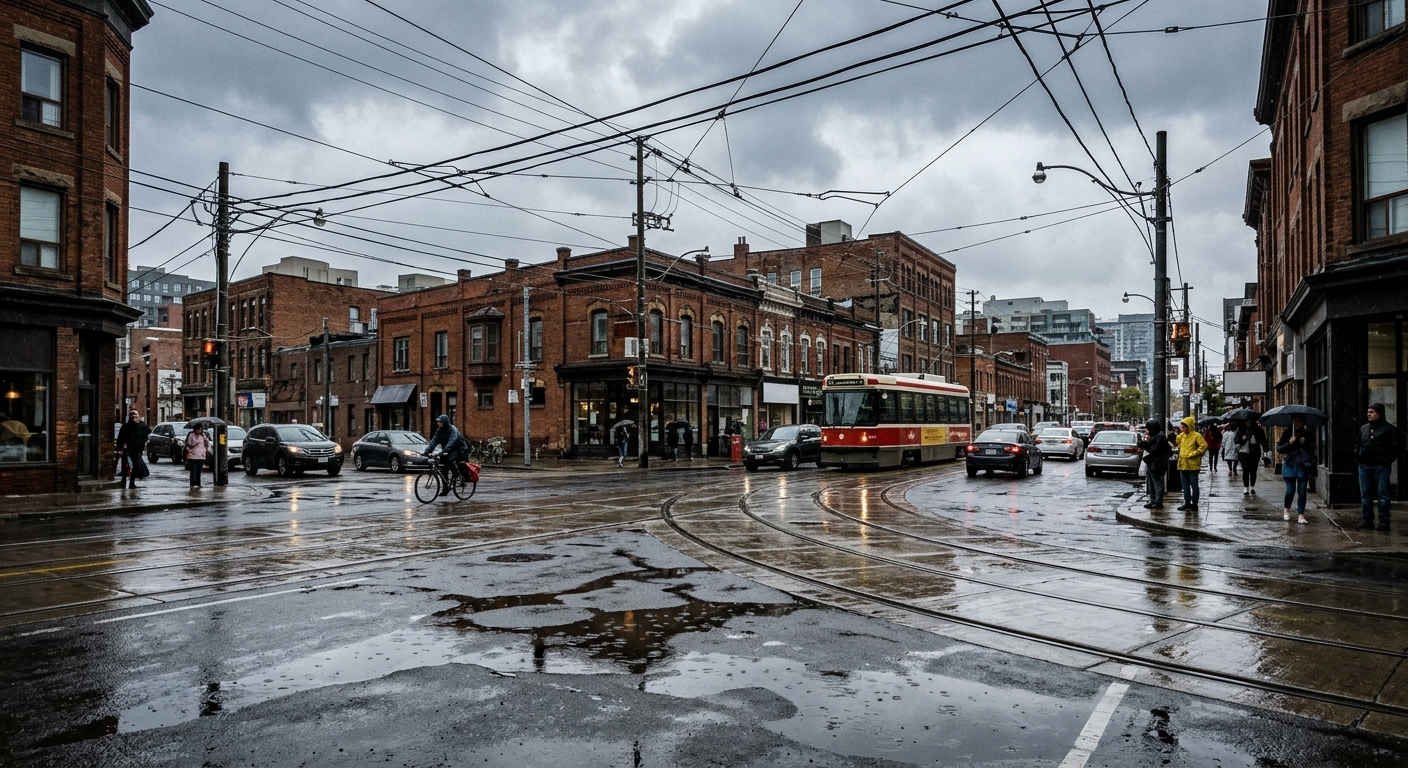
AI-generated illustration; not a photograph of the reported event.
- calendar_today November 6, 2026
Majority Express Doubt Over Municipal Climate Change Preparedness
A new poll conducted by Canada Pulse Insights for CityNews has revealed that a majority of Toronto and Greater Toronto Area (GTA) residents do not believe their municipality is adequately prepared for climate-change related emergencies.
Public Opinion in Toronto and the GTA
In Toronto, 60 percent of survey respondents disagreed with the statement "I believe my municipality is prepared for climate-change emergencies." Specifically, 17 percent disagreed strongly and 43 percent disagreed somewhat. Only 10 percent agreed strongly, while 30 percent agreed somewhat that their municipality was prepared.
Similarly, in the GTA, 56 percent expressed a lack of confidence in municipal preparedness—11 percent disagreed strongly, and 45 percent disagreed somewhat. Just seven percent agreed strongly and 33 percent agreed somewhat. Levels of agreement on municipal preparedness are comparable between Toronto (40 percent) and the GTA (44 percent).
Regional Differences in Confidence
Breaking down the findings by locality, Mississauga residents appear more confident in their municipality's climate change preparedness, with 49 percent in agreement. Meanwhile, 43 percent of those in Durham, York, Halton, and the rest of Peel Region shared this sentiment. Notably, Torontonians are more likely to disagree strongly (17 percent) than those in the wider GTA (11 percent).
Age Differences Shape Perceptions
The survey highlighted significant age-related differences regarding climate emergencies. Agreement is highest among those aged 18–34, with 51 percent (including 15 percent strongly) confident in their municipality’s preparedness. Among the 35–54 age group, 38 percent agreed, while for those aged 55 and over, 40 percent were in agreement, but only three percent agreed strongly.
Gender and Public Opinion
The poll found minimal overall disparity between men (45 percent in agreement) and women (40 percent) throughout the region. However, in Toronto proper, 48 percent of men agreed that their municipality is prepared for climate-change emergencies, compared to only 34 percent of women.
City Council Trust Influences Views on Preparedness
Perception of city councils plays a major role in residents’ confidence. Among those who rated their city council positively, 52 percent felt their municipality is ready for climate-change emergencies. In contrast, only 29 percent of respondents who held a negative view of their city council agreed with the preparedness statement.
Climate Change Concerns Not a Top Priority
Despite the concerns about preparedness, climate change is not a leading issue for residents. When asked to name the three most significant issues facing their municipality, just nine percent of Torontonians and seven percent of GTA residents cited climate change and extreme weather impacts.
Instead, affordability and cost of living dominated concerns, named by 43 percent of Toronto residents and 40 percent in the GTA. Other pressing issues included crime and public safety (29 percent in Toronto, 30 percent in the GTA), traffic congestion and road infrastructure (25 percent in Toronto), and municipal taxes, spending, and the budget (28 percent in the GTA). Housing affordability was also mentioned by 24 percent in Toronto and 27 percent in the GTA.
Across demographics such as age, gender, home ownership, and income, there was little variation (seven to ten percent) in those citing climate issues as most important.
About the Survey
The poll surveyed 510 adult residents of Toronto and 825 adult residents of the Greater Toronto Area—covering Mississauga as well as the regional municipalities of Durham, York, Halton, and Peel. Conducted by Canada Pulse Insights between September 14 and 25, 2026, the survey has a margin of error of +/- 4.3 percentage points for Toronto and +/- 3.4 for the GTA, 19 times out of 20.
Conclusion
Overall, the findings suggest that while Toronto and GTA residents are skeptical about municipal preparedness for climate-change emergencies, their immediate concerns are focused on affordability, crime, and infrastructure rather than climate impacts. Trust in city councils and age appear to shape confidence in preparedness most strongly.
Related coverage
Source: toronto.citynews.ca.


