- calendar_today August 12, 2025
Artificial intelligence has become mainstream in Toronto’s real estate sector by 2025. As Canada’s largest city continues to grapple with affordability issues, tight inventory, and intense competition, AI is giving buyers a critical digital advantage.
AI systems are now embedded in real estate portals, digital lenders, and workflow tools across metro Toronto. Whether someone is house-hunting in Etobicoke or condo-searching downtown, their experience is being shaped in real time by machine learning and predictive analytics.
Here’s a deeper look into the five ways AI is reshaping real estate in 2025 for GTA homebuyers.
1. Generative AI Writing Listings Better
Toronto sellers and brokers now rely on generative AI to draft compelling listing descriptions that highlight value propositions—like community services, energy-efficient upgrades, and transit proximity.
Beyond text, AI also powers virtual home tours and augmented staging. Buyers can see side-by-side comparisons of renovation scenarios like updated kitchens or added basement suites. This visual insight reduces initial in-person visits, especially from vendors relocating out of province or overseas.
From Rosedale bungalows to Junction-area lofts, descriptive authenticity won’t replace AI—but it helps buyers imagine life inside the space before touring.
2. Natural-Language Search and Chat Interfaces
Gone are the days of rigid keyword boxes. Toronto buyers can now type requests like “Show me bungalows near St. Clair with English‑French immersion schools and under $1 million,” and AI will display matching properties—including hidden gems in suburban pockets otherwise overlooked.
Medical professionals, lawyers, new immigrants, and multicultural families also benefit: Toronto’s multilingual AI interfaces give search results in both English and key languages like Mandarin, Punjabi, or Tagalog.
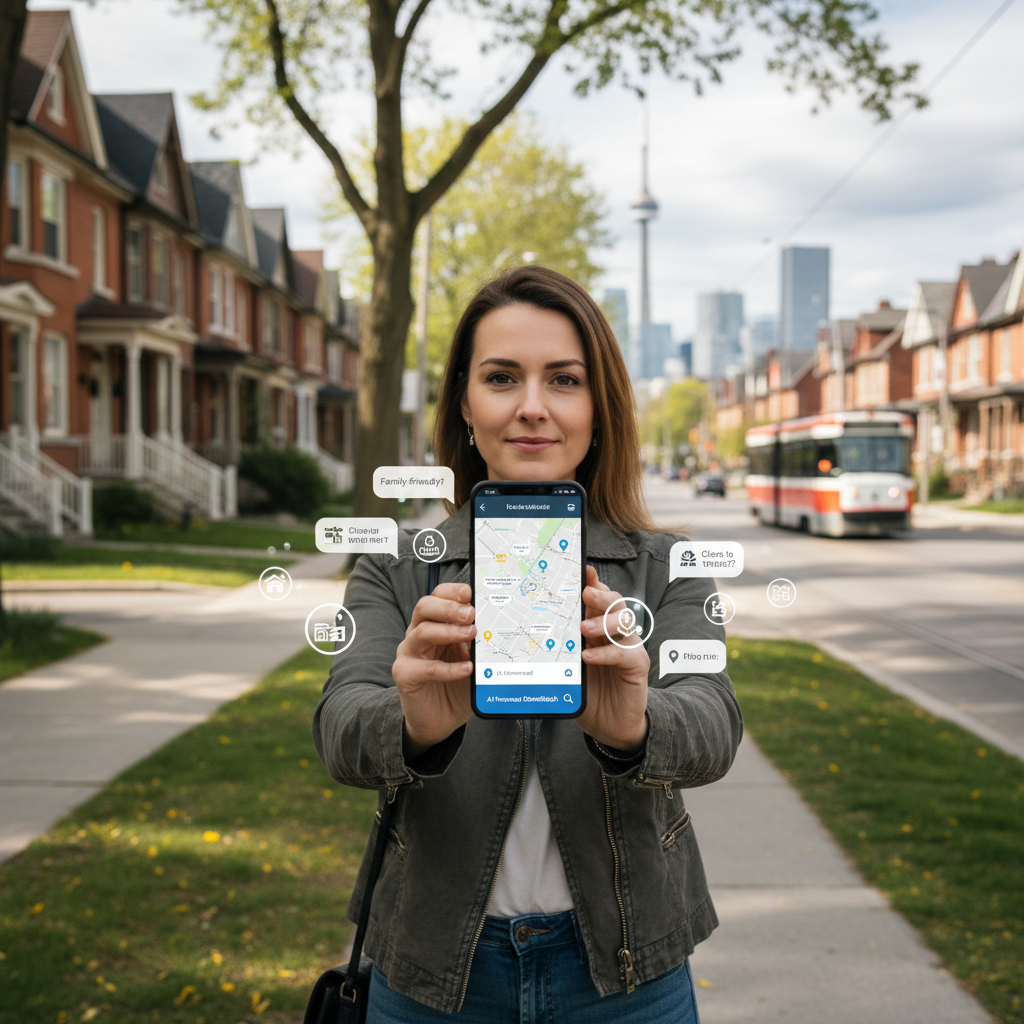
Voice search capabilities are also emerging. Buyers can speak requests into mobile apps while walking past listings—asking about square footage or home age and getting instant AI-powered responses.
3. Instant Financing Through AI
Securing a mortgage quickly is now possible in Toronto. AI-based lenders ingest bank statements, cross‑check CRA files, and analyze spending patterns and credit behaviors to offer fast, data‑backed loan approvals—often in hours instead of days.
Some lenders even tailor mortgage suggestions—fixed vs. variable, term length and prepayment options—based on income traits and interest‑rate projections. In bidding-war scenarios, having a pre‑approved mortgage powered by AI boosts buyer credibility and negotiating leverage significantly.
4. Contextual Market Insights
AI is delivering data-rich, hyper-local market reports to Toronto buyers in real time. These dashboards crunch recent sale prices, days-on-market averages, school rankings, noise complaints, renovation permits, and energy-consumption trends.
For example, a buyer looking at a starter home near the Beltline or Yonge & Eglinton can see a forecasted price chart based on similar nearby sales and regional demand flows. The tool also highlights newly approved school additions or transit plans—elements that shape long-term property values.
This level of granular foresight helps buyers make more confident offers, especially in fast-paced micro‑markets.
5. Efficiency Through Automation
Behind the scenes, AI is reshaping real estate workflows. Chatbots on brokerage sites handle basic questions about showings, document requirements, and financing.
AI-powered CRMs help agents prioritize buyers who have booked tours, reviewed multiple virtual listings, or asked questions about financing—bringing focus to clients most likely to close. This allows agents to spend more time on negotiation strategy and client care.
On the buyer side, automated document upload and verification through AI apps ensures fewer delays, missed signatures, or resubmission requests—smoothing what was once a painful process.
Risks to Consider
As AI becomes more central, Toronto buyers face concerns around algorithmic fairness, data privacy, and trust.
Bias may persist in results if models train on outdated or skewed data—leading to disparities in how certain areas are presented or valued.
Data transparency is essential. Buyers want clarity on how their personal information is used and who it’s shared with. Toronto’s real estate community is debating whether platforms should provide “explainability” letters or opt-out options for data collection.
Sponsored content risks: When listings are pushed due to promotional deals, buyers want to know which results are ads versus algorithmically selected matches. Advocates are pushing for clearer disclosures.
GTA Adoption: Stats Worth Noting
Survey findings from early 2025 show AI’s deep penetration across the GTA buyer market:
- 62% of buyers used AI search tools or chatbots during their property hunt.
- Real estate platforms with AI‑enhanced property visuals saw 38% higher retention on listing pages.
- Mortgage approval times at digital lenders using AI dropped by nearly 50%, significantly speeding up offer preparation.
In response, many traditional brokerages in Mississauga and Brampton are investing in their own AI portals and lead-scoring tools to compete.
Where Human Insight Still Matters
Despite AI’s reach, human relationships and local expertise remain essential in Toronto’s market. Agents provide nuanced context—like zoning changes, shared-living nuances in multigenerational homes, or future area growth potential.
Negotiation strategy is still a human art. Understanding a seller’s motivations or reading market sentiment in meetings can’t yet be replicated by any AI model.
Ultimately, combining AI’s analytical precision with real estate professionals’ emotional intelligence offers the strongest path to success in the GTA.
Final Takeaway
In Toronto’s 2025 housing landscape—marked by intense competition, affordability constraints, and low inventory—AI is emerging as a vital assistant. It helps with speed, clarity, and customization, while pairing naturally with skilled agents to guide buyers through complex decisions.
The most successful Toronto homebuyers will be those who harness technology without losing sight of the relationships and cultural knowledge at the heart of real estate. AI is a powerful tool—but the art of homebuying still begins and ends with people.